Start my journey

Tayrona
Caribbean Coast

Tayrona

Where the jungle meets the Caribbean and neither one gives way.

Beach & Jungle 🌴 Best: Dec – Jan (excellent: dry, open, high season) and Mar – May and Jul – Sep (good: between closures, manageable weather). Park closes annually: Feb 1-15, Jun 1-15, and approximately Oct 19 – Nov 2. Verify exact dates for year of travel.
About

About Tayrona

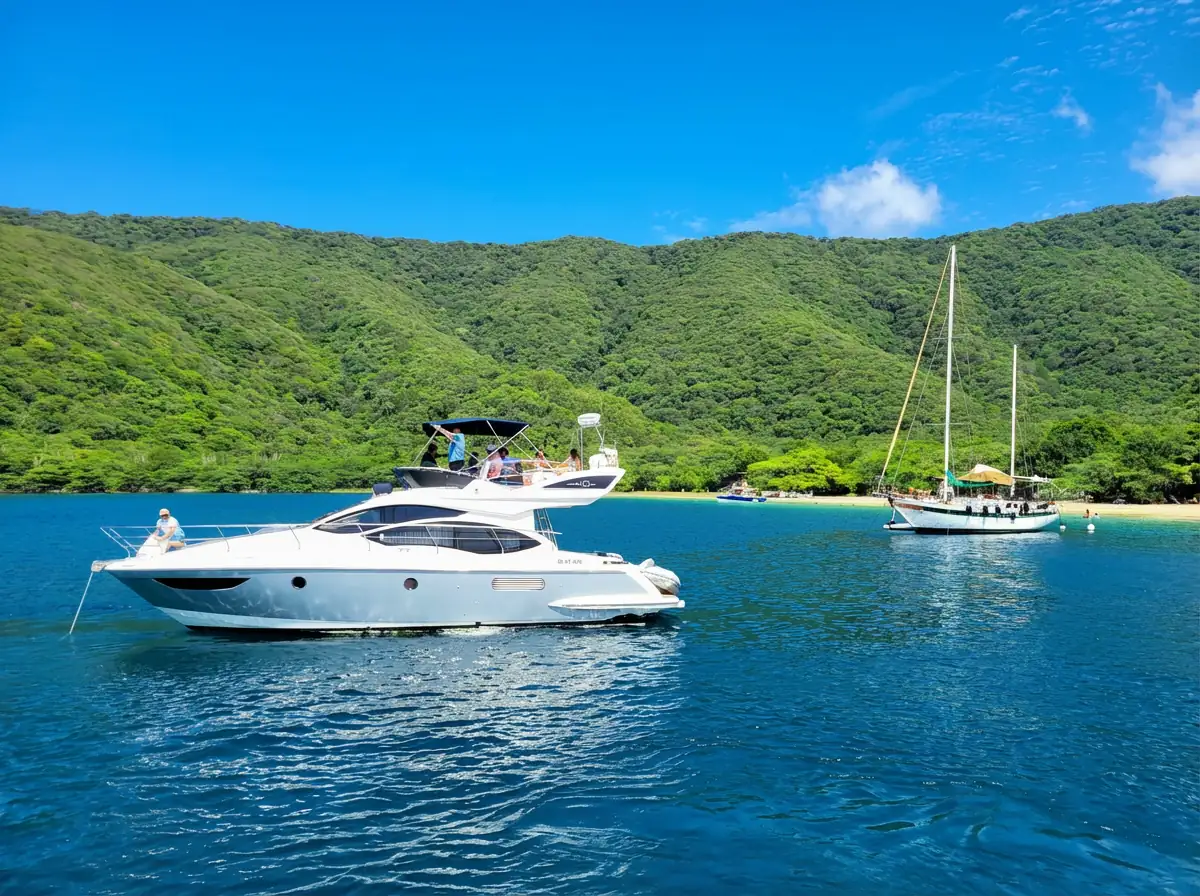
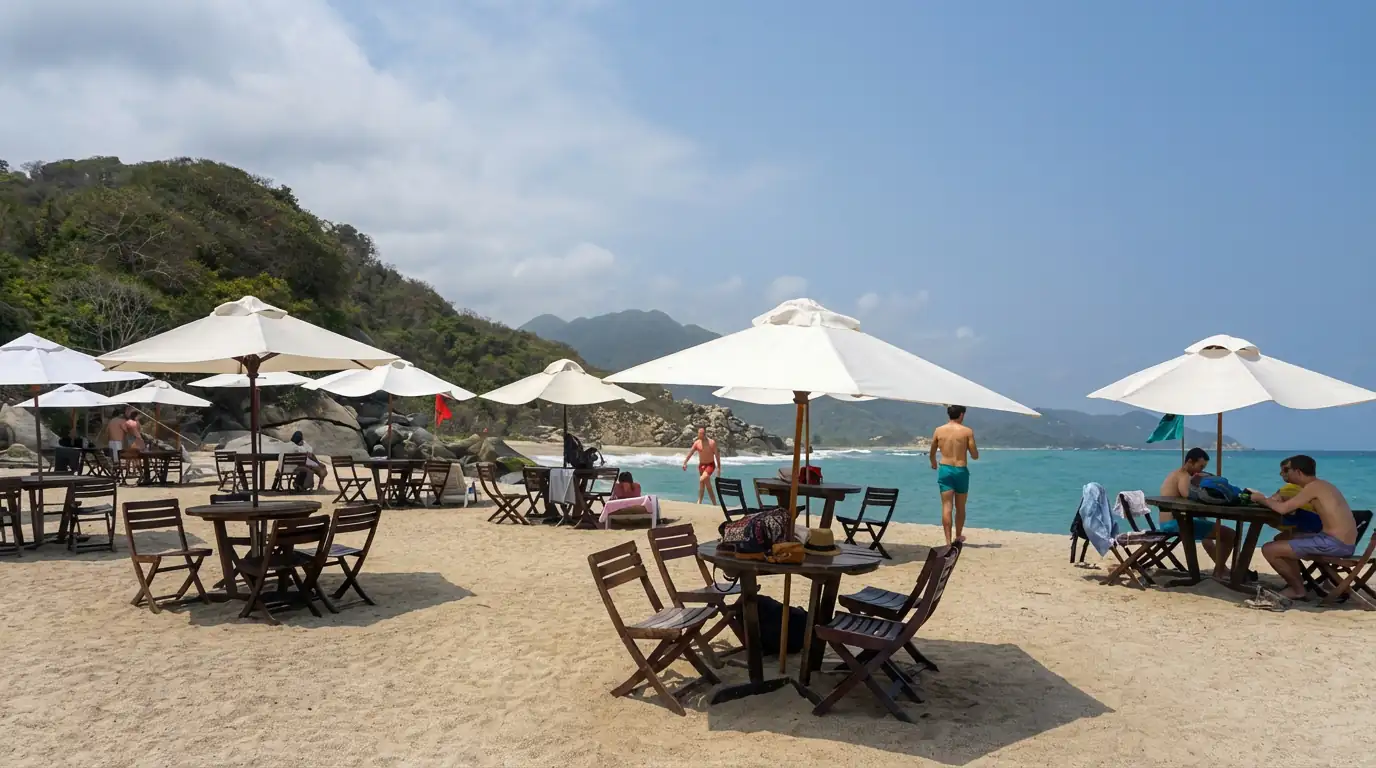
Tayrona is 150 square kilometers of protected land where the Sierra Nevada de Santa Marta descends directly into the Caribbean Sea. The forest here is dense enough to qualify as jungle, but it opens repeatedly onto white sand beaches where the water is shallow and clear, and where the sound of the ocean competes with birds you will not encounter anywhere else on Earth. More than 300 bird species have been recorded inside the park. The marine zone protects more than 100 coral species in Caribbean waters that remain some of the most intact in Colombia.

The park was established in 1969. The Kogi, Wiwa, Arhuaco, and Kankuamo communities, descendants of the ancient Tairona civilization who built cities in these mountains long before the Spanish arrived, maintain ancestral rights over large sections of the territory. The three annual closures (February, June, and October-November) exist in part to allow these communities to conduct spiritual ceremonies on their ancestral lands, and in part to allow the ecosystem to recover from visitor pressure.

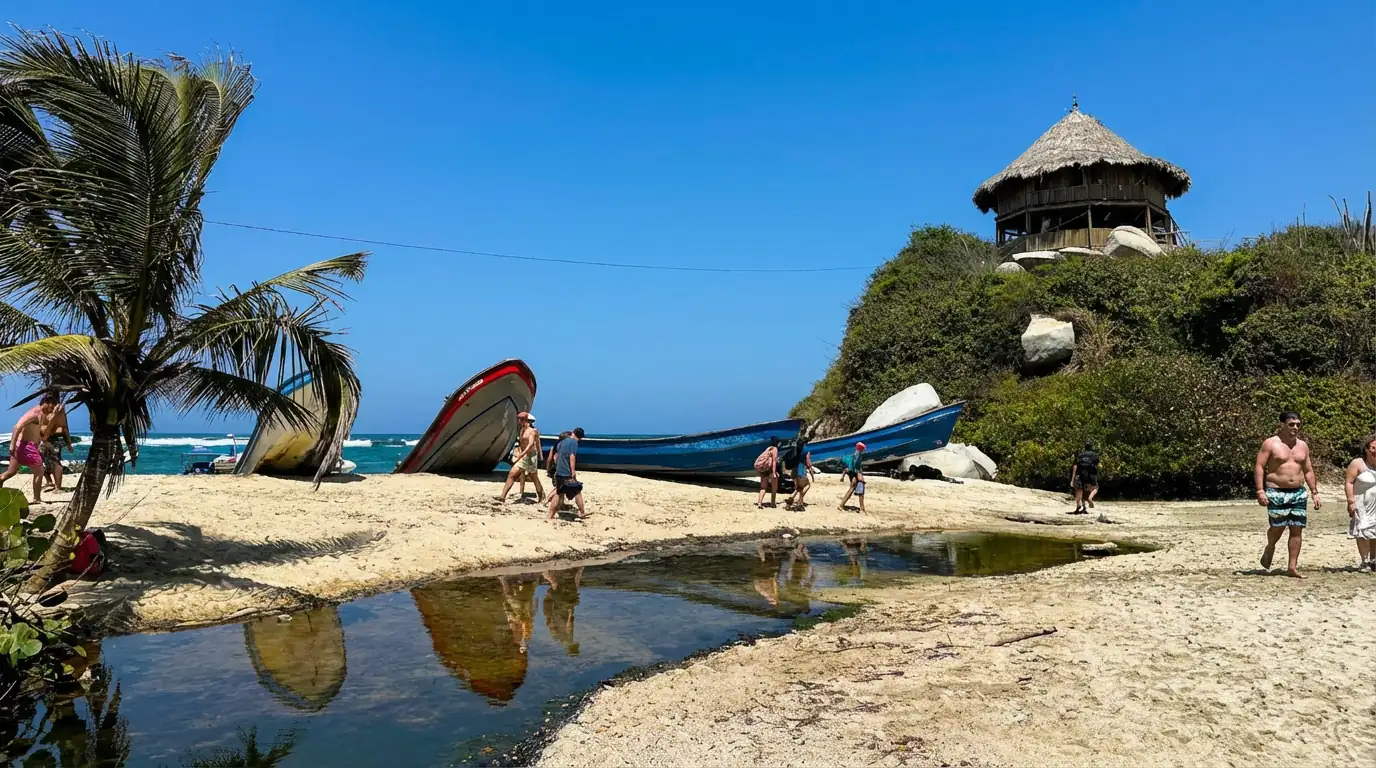
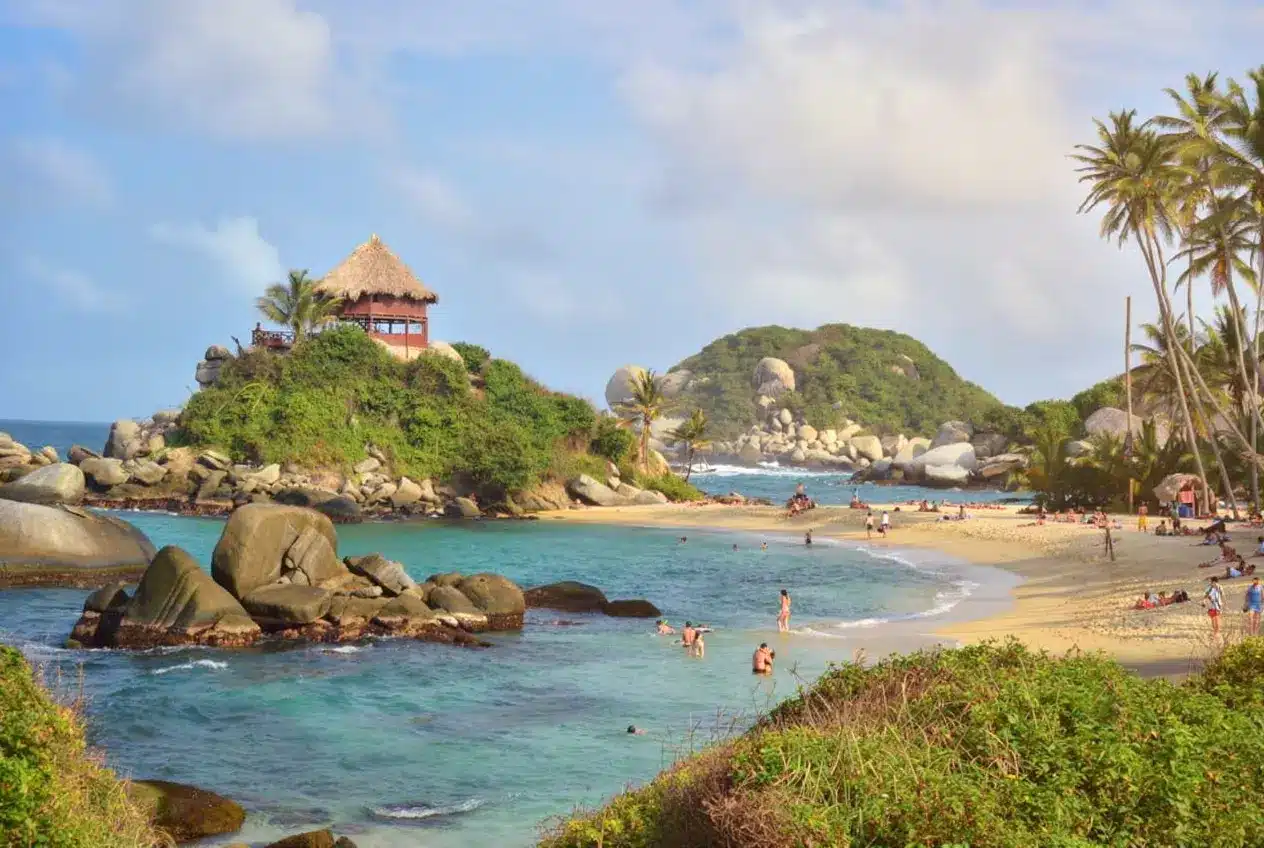
Cabo San Juan del Guía is the most iconic point in the park: a headland where two beaches meet at the base of a forested hill, with hammocks strung under a traditional structure that has appeared in more Colombian travel photographs than almost any other image in the country. Playa Cristal (also called Playa Arrecifes del Paraíso), accessible by boat from the Calabazo entrance, has the clearest water in the park and has been ranked among the top 25 beaches in South America. The trails between them pass through forest that is never less than interesting.
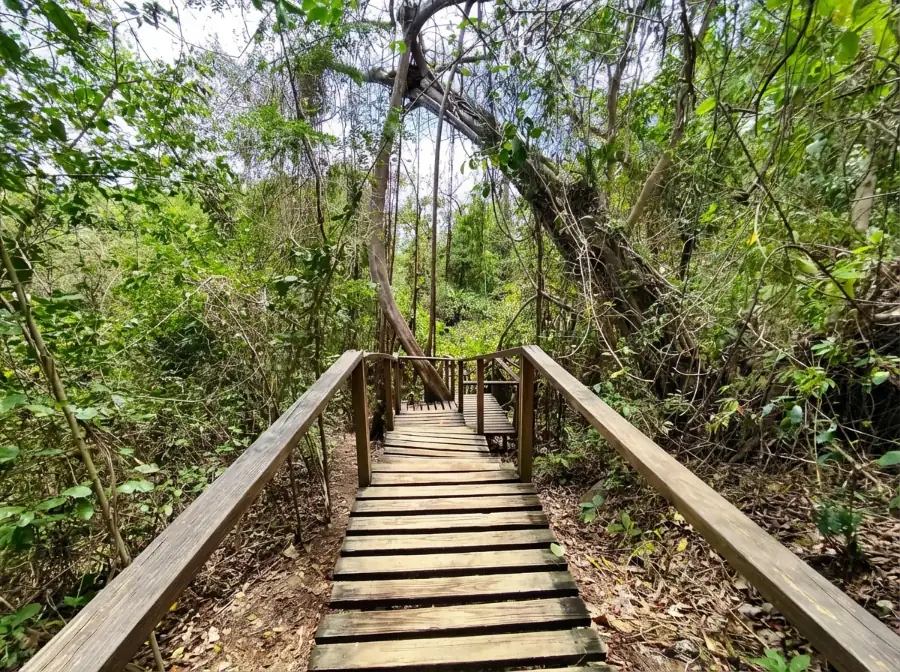
Tayrona
Ready to explore Tayrona?
Let us design your trip around the places that matter.
Start planning
Weather

Climate Month by Month

Plan your trip around Tayrona's seasonal patterns.

Jan
☀️
29°  /  24°
Feb
☀️
29°  /  24°
Mar
☀️
29°  /  25°
Apr
30°  /  25°
May
🌧️
30°  /  25°
Jun
🌧️
30°  /  25°
Jul
30°  /  26°
Aug
🌧️
30°  /  26°
Sep
🌧️
30°  /  26°
Oct
⛈️
30°  /  26°
Nov
⛈️
29°  /  25°
Dec
☀️
29°  /  24°
Getting Here

How to Get to Tayrona

The most comfortable way to reach Tayrona is by private transfer arranged through your travel agency, door-to-door from your hotel in Santa Marta to the park entrance in an air-conditioned vehicle. Shared buses (busetas) to Calabazo also depart from the Mercado Público in Santa Marta throughout the morning and are a budget-friendly alternative.From the entrance to the beaches: 30-45 minutes on foot through jungle trails to Arrecifes, then another 30 minutes to Cabo San Juan. Horses are available for hire at the entrance for those who prefer not to hike in. The trail to Playa Cristal is a separate route; a boat from the Calabazo beach is faster. Eco-lodge and camping accommodation exists inside the park (Ecohabs being the most recognized); book months in advance for December and January.
Getting to Tayrona
Where to Stay

Best Areas in Tayrona

Each neighborhood offers a different side of the city.

Calabazo Entrance Zone
The main park access point on the highway. Small restaurants, horse rental, and the trailhead for the main beach circuit. This is not a place to stay; it is the starting point.
Arrecifes
The first major beach reached on foot, approximately 40 minutes from the entrance. Accommodation and food available. The surf here is strong and swimming is not recommended at Arrecifes itself.
Cabo San Juan del Guía
The most visited point in the park. Two beaches on either side of a forested headland, hammock accommodation above the water, and the most photographed sunset in Tayrona. Camping and basic accommodation on site.
Playa Cristal (Playa Arrecifes del Paraíso)
The clearest water in the park. Accessible by boat from the Calabazo zone. Snorkeling over the coral reef, calm water for swimming, and significantly fewer visitors than Cabo San Juan.
El Zaino / Ecohabs
The Ecohabs (treehouse-style cabins built into the forest above the beach) are the premium accommodation option inside the park. Book 6-8 weeks in advance for high season.
Gastronomy

What to Eat in Tayrona

Colombia's culinary scene is as diverse as its landscapes.
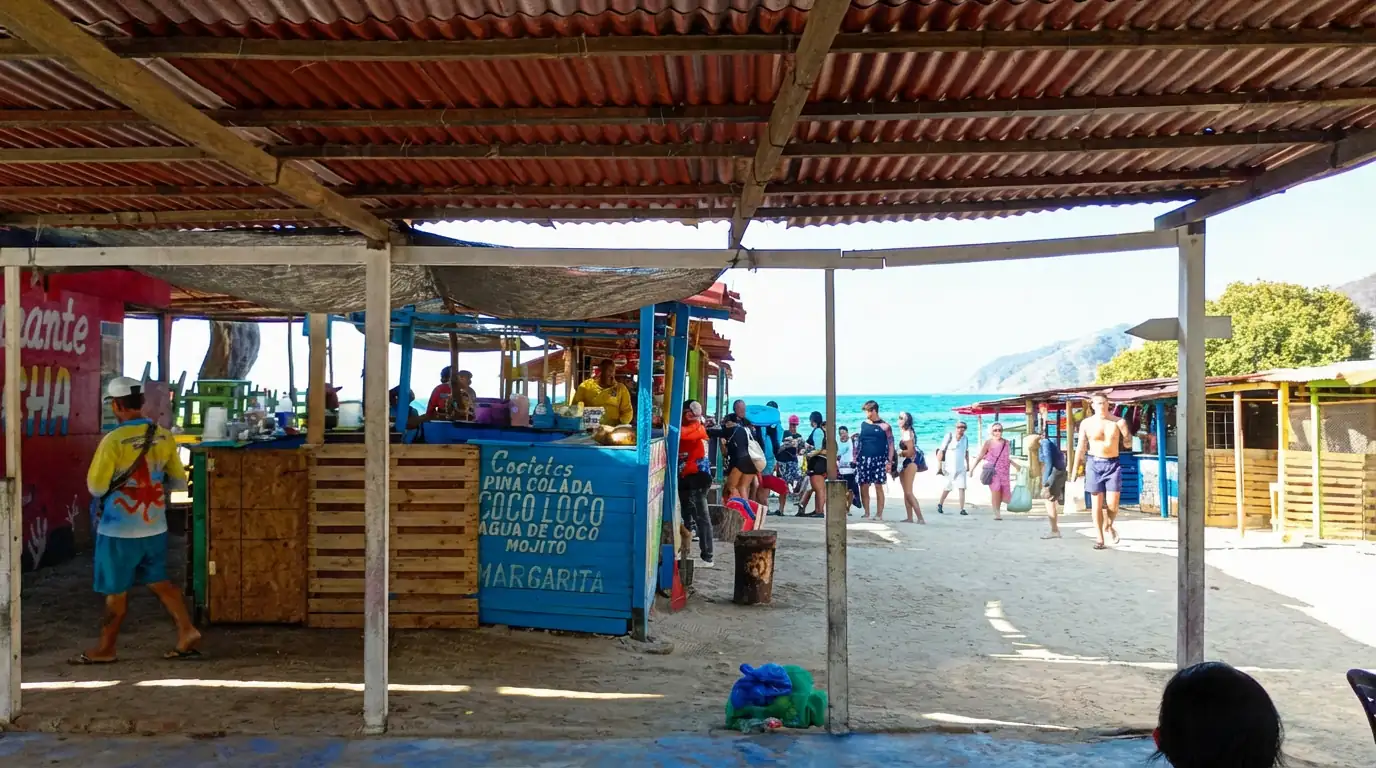
Food in Tayrona
Pescado Frito
Whole fried fish from the Caribbean, served with coconut rice, patacones, and salad. The standard meal at every beach restaurant inside the park. The fish is fresh from local fishing communities.
Arroz con Coco
Coconut rice, indispensable alongside any seafood plate on the Caribbean coast. The park restaurants prepare versions ranging from plain to richly toasted depending on the cook.
Ensalada de Frutas (Salpicón)
A mix of tropical fruits in fruit juice, sometimes with condensed milk, sold in cups at the beach stalls. Light and genuinely refreshing after a hot trail hike.
Agua de Coco
Fresh coconut water sold at the beach restaurants and at vendors near the park entrance. Essential hydration on hot days, particularly after hiking.
Travel Tips

Practical Information

Currency
Cash (COP) strongly recommended inside the park. The main entrance accepts cards; beach restaurants and eco-lodges work primarily in cash.
Park Entrance Fee
Approximately COP 60,000-80,000 per person (verify current fee). The fee is paid at the Calabazo gate.
Park Closures
Feb 1-15, Jun 1-15, approximately Oct 19 – Nov 2 annually. These dates are set by the park authority (Parques Nacionales Naturales de Colombia) and should be verified for the specific year of travel.
Heat
Inside the park is hot (28-30°C) and humid, with shade along the jungle trails. Start hikes before 9am to avoid the worst heat.
Insects
Carry and apply insect repellent throughout. The jungle sections of the trail are active for mosquitoes in the late afternoon.
Connectivity
Mobile signal is limited or absent inside the park beyond the first entrance zone. Download offline maps before entering.
Wildlife
The park contains venomous snakes. Stay on marked trails and avoid reaching into vegetation or under rocks.
Luggage
Bring only what you need for the nights inside the park. Leave excess luggage at your hotel in Santa Marta or Taganga.
Travel Safety

Is Tayrona Safe?

✅ Very Safe

Tayrona National Park is one of the safest destinations in Colombia for visitors. The park is well-managed by Parques Nacionales and has a permanent ranger presence. The main safety risks are environmental: strong currents at certain beaches (Arrecifes beach is explicitly unsafe for swimming), heat, and wildlife on the trails. Follow park guidelines and posted warnings.

Do not swim at Playa Arrecifes (marked with warning signs). The currents are extremely dangerous. This warning is serious.
Cabo San Juan and Playa Cristal are safe for swimming. Confirm conditions with rangers on arrival.
Stay on marked trails. The park layout is clear and well-signposted.
Watch for monkeys at the camping and eating areas. They are bold and will take unattended food.
Leave valuables in locked storage at your eco-lodge or camping site. Do not leave unattended on the beach.
Carry 2-3 liters of water per person for any full-day trail hike. The jungle provides no reliable fresh water access between beach stops.
Location

Where is Tayrona?

Tayrona
Tayrona
Tayrona
Tayrona
Tayrona
The Good Traveler
Online · Typically replies fast
Hi! Ready to explore Tayrona?
Send us a message and we'll help you plan your perfect trip.
Continue on WhatsApp
or
Got it — we'll be in touch!
We'll contact you within a few hours on your preferred channel.