Start my journey

Chocó
Pacific Coast

Chocó

Two jungles, one ocean, and the world's best kept secret.

Rainforest 🌿 Best: Jan – Feb (drier, ideal for general nature exploration) and Jul – Nov (humpback whale season). Oct – Jan overlaps with sea turtle nesting season. Nov is the wettest month overall. There is no truly dry season in Chocó; plan around your priority: whales (Jul-Nov) or a relatively drier base (Jan-Feb).
About

About Chocó

There is no gradual introduction to the Chocó. From Medellín or Bogotá you board a small propeller aircraft, land on a jungle airstrip, and step directly into one of the most biologically complex ecosystems on Earth. The Chocó bioregion spans Colombia's Pacific coast into northwest Ecuador and contains an estimated 9,000 plant species, more than 600 bird species, and levels of biodiversity that have made it a global priority for conservation science.

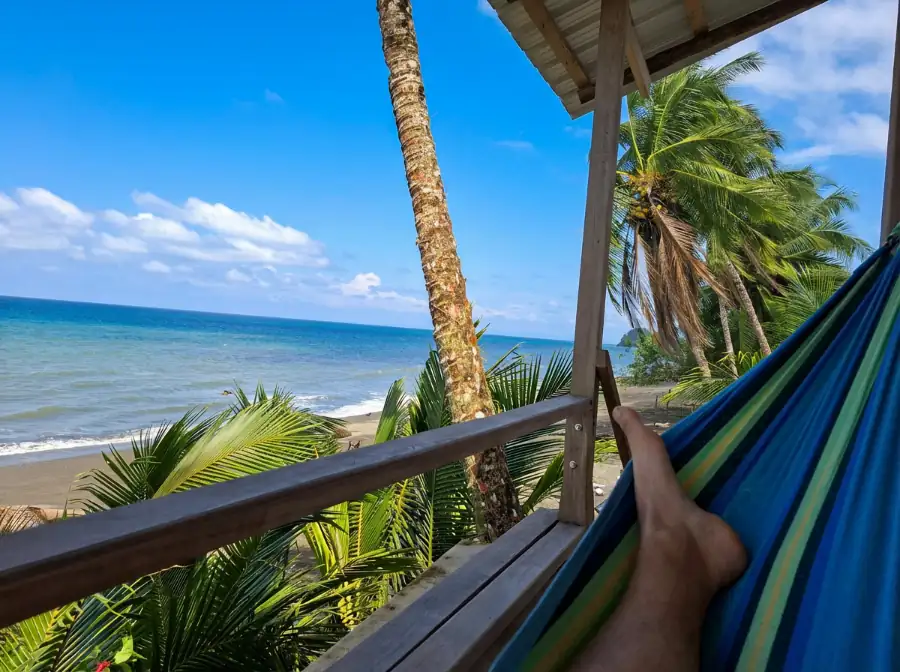
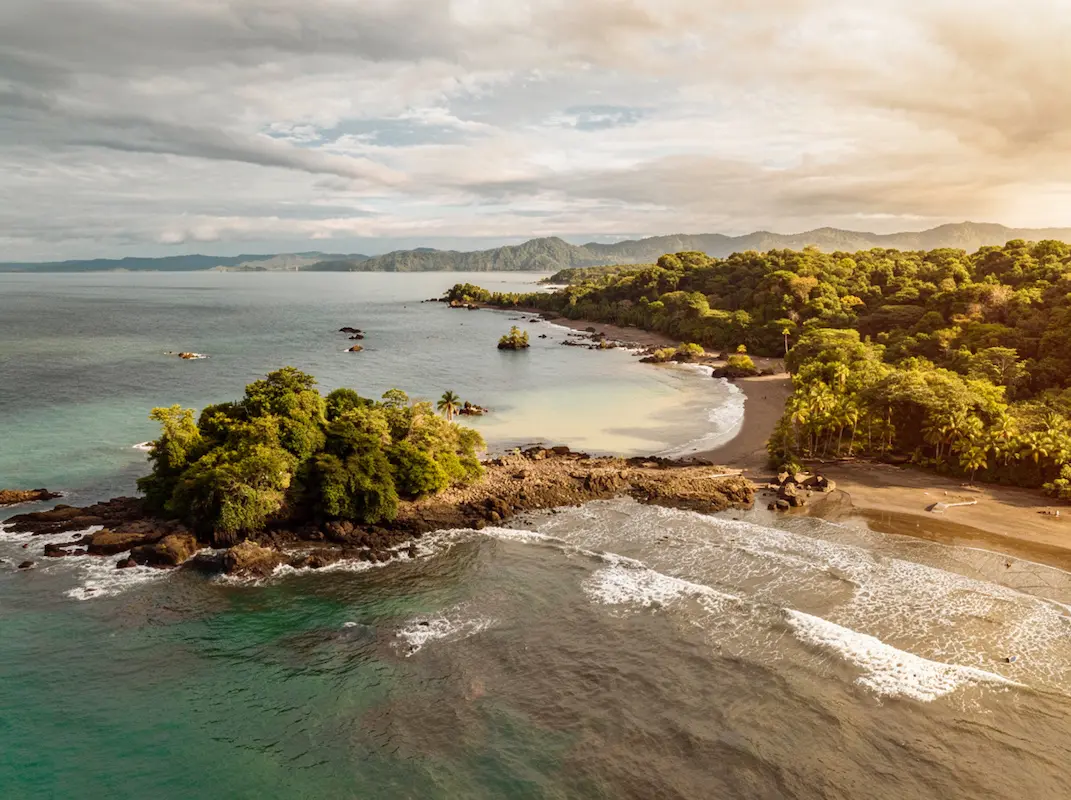
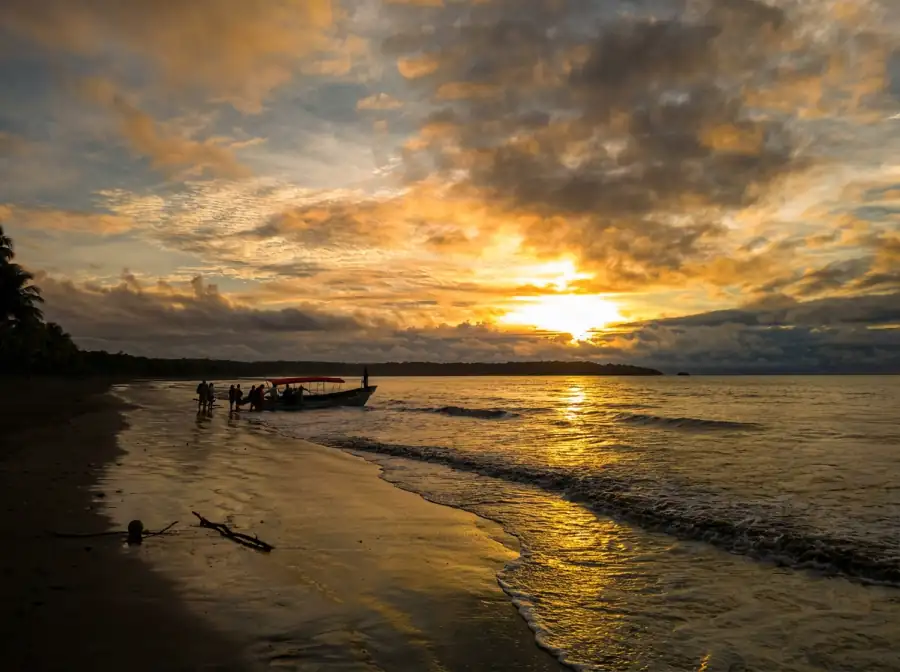
The towns of Nuquí and Bahía Solano are the main entry points, positioned 50 kilometers apart on the Pacific coast of the Chocó department, surrounded by primary rainforest, with black sand beaches where the jungle reaches the treeline at the ocean's edge. There are no roads connecting these communities to the rest of Colombia. That isolation is the reason the ecosystem has survived. Between July and November, humpback whales migrate from Antarctic feeding grounds to these warm equatorial waters to breed and give birth. The bays around Nuquí and Bahía Solano are among the most reliable locations in the world for close-range whale encounters. Between October and January, three species of sea turtles, including the leatherback, the largest reptile on Earth, nest on these same beaches.

The communities here are predominantly Afro-Colombian and Emberá indigenous, and the culture, the cooking, the music, and the relationship to the land and ocean are inseparable from the forest that surrounds everything. Visiting the Chocó is not adventure tourism in the conventional sense. It is an encounter with a part of the world that has not been made convenient for visitors, and that remains its greatest distinction.
Chocó
Ready to explore Chocó?
Let us design your trip around the places that matter.
Start planning
Weather

Climate Month by Month

Plan your trip around Chocó's seasonal patterns.

Jan
29°  /  22°
Feb
29°  /  22°
Mar
🌧️
29°  /  23°
Apr
🌧️
29°  /  23°
May
🌧️
28°  /  23°
Jun
🌧️
28°  /  23°
Jul
🌧️
28°  /  23°
Aug
🌧️
28°  /  23°
Sep
🌧️
28°  /  23°
Oct
⛈️
28°  /  22°
Nov
⛈️
28°  /  22°
Dec
🌧️
29°  /  22°
Getting Here

How to Get to Chocó

No road access from the interior of Colombia. All transport is by small aircraft. Satena and Costeño Air operate regular flights from Medellín (EOH) to Nuquí and Bahía Solano. Flight time: approximately 45 minutes. Book early; flights are small (10-20 seats) and fill quickly during whale season.From Nuquí to accommodations: local boat or short walk, depending on the lodge location. Between Nuquí and Bahía Solano: 2-3 hours by lanchas (motorized boats) along the coastline. This is not a comfortable journey in heavy seas; confirm weather conditions with your lodge. From Bogotá: connecting flight via Medellín.
Getting to Chocó
Where to Stay

Best Areas in Chocó

Each neighborhood offers a different side of the city.

Nuquí
The main town of the southern Chocó Pacific coast. Small, walkable, with a market and basic services. The departure point for whale watching operations, turtle beaches, and jungle hikes. Most eco-lodges are located north of town along the coast, accessible by boat.
Termales de Nuquí
Natural hot springs at the edge of the jungle where geothermally heated water meets a cold river 15 minutes by boat from town. One of the most unusual natural features of the Colombian Pacific.
El Valle
A small community north of Nuquí with the primary sea turtle nesting beach (Playa Almejal) and access to the Utría National Park. The most remote and the most rewarding.
Bahía Solano
A larger town 50 kilometers north, with a small airport and a different atmosphere. More practical infrastructure, a port community feel, and access to beaches like Playa Huina and Playa El Almejal.
Parque Nacional Natural Utría
A protected marine and terrestrial park between Nuquí and Bahía Solano. The enclosed bay (Ensenada de Utría) is one of the most reliable places for whale watching in Colombia. Accessible only by boat.
Gastronomy

What to Eat in Chocó

Colombia's culinary scene is as diverse as its landscapes.
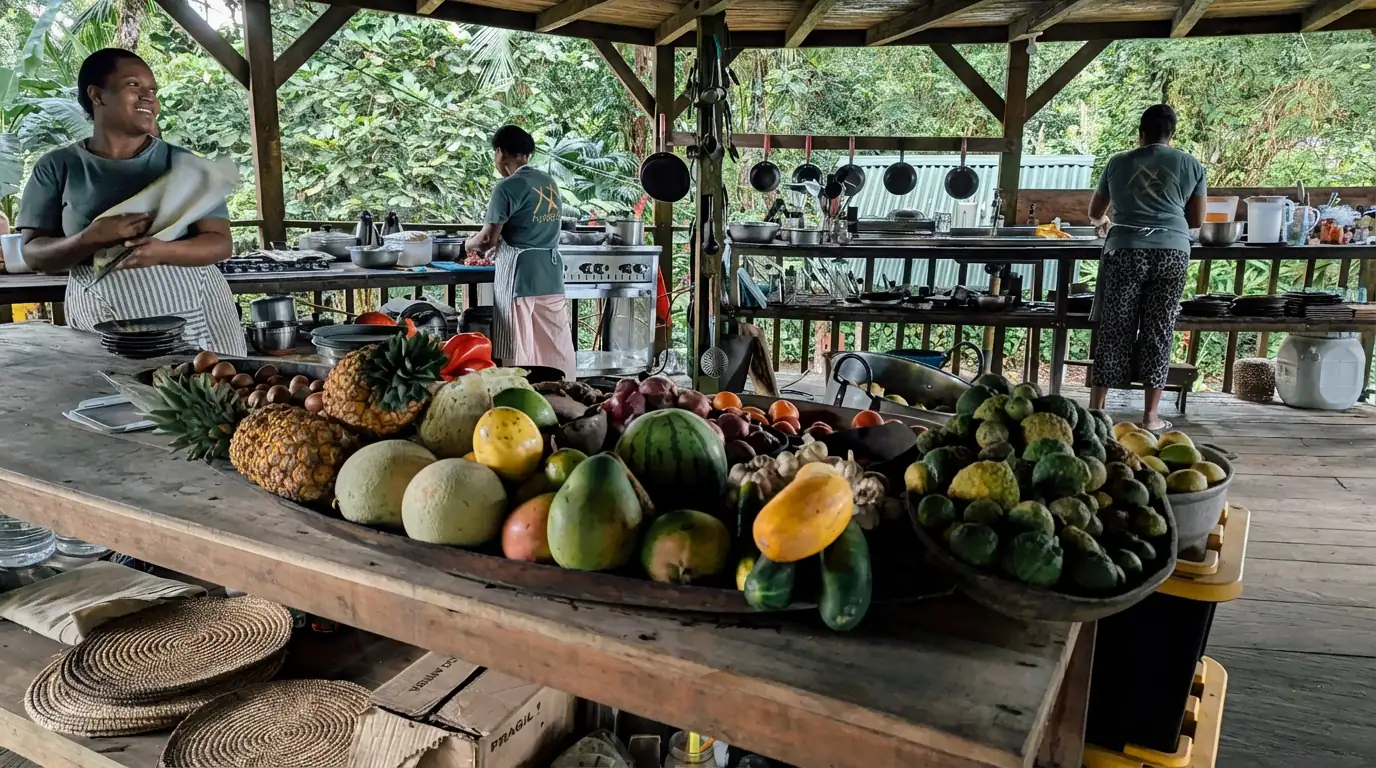
Food in Chocó
Pescado Encocado
Fish slow-cooked in a thick coconut milk sauce with spices from the Afro-Colombian Pacific tradition. The defining cooking style of the Chocó coast and one of the most distinctive preparations in Colombian gastronomy.
Cangrejo Azul
Blue crab from the Pacific estuaries, typically boiled or cooked in coconut broth. Seasonal availability and genuinely different from Atlantic or Caribbean crab in flavor.
Piangua
A small black clam harvested by Afro-Colombian women from the mangrove roots of Pacific estuaries. Cooked in coconut sauce, stewed with herbs, or eaten raw with lime. A Chocó specialty almost impossible to find elsewhere in Colombia.
Biche
A raw sugar cane spirit traditional to the Pacific coast communities, distilled by Afro-Colombian women using methods passed through generations. More complex than standard aguardiente, consumed warm or in cocktails.
Chontaduro
Palm fruit native to the Pacific lowlands, boiled and served with salt and honey. Available from street vendors in Nuquí and Bahía Solano. The primary street food of the Chocó.
Bollo de Maduro
A steamed sweet plantain parcel cooked in banana leaf. A sweet breakfast and snack staple throughout the Pacific coast communities.
Travel Tips

Practical Information

Currency
Cash only in Nuquí and most of Bahía Solano. There are no reliable ATMs. Bring all the cash you will need for the entire trip from Medellín or Bogotá.
Flights
Book Satena or Costeño Air flights well in advance, particularly Jul-Nov. These are small aircraft with no excess baggage tolerance. Soft bags preferred; hard-shell luggage over 10kg is problematic.
Rain
The Chocó is one of the wettest places on Earth (6,000-8,000mm annual rainfall in Nuquí). Pack all electronics in waterproof bags. Bring lightweight waterproof layers. Rain is warm and passes quickly.
Temperature
24-29°C year-round with very high humidity. Light, breathable clothing. Sun protection is essential on the water.
Connectivity
Mobile signal is intermittent in Nuquí and poor in Bahía Solano. Most eco-lodges have satellite WiFi but it is slow. Use this as an opportunity to disconnect.
Insects
The Chocó has significant mosquito activity, particularly at dawn and dusk near rivers and mangroves. DEET-based repellent is essential. Malaria prophylaxis is recommended; consult your doctor before travel.
Whale Season
Jul-Nov. The peak concentration is Aug-Oct. Boat-based whale watching is operated by local community guides and is subject to sea and weather conditions.
Travel Safety

Is Chocó Safe?

🛡️ Safe for Tourists

The Pacific coast communities of Nuquí and Bahía Solano are safe for tourists staying in registered eco-lodges and using established transport operators. The primary risks are environmental (the ocean, river crossings, jungle trails) rather than security-related. The Pacific coast communities of Nuquí and Bahía Solano are welcoming, safe destinations for travelers staying in registered eco-lodges and using established operators. The primary considerations are environmental, ocean currents, jungle trails, and the remote nature of the region which is precisely why traveling with a knowledgeable guide and a trusted agency makes the experience both safe and extraordinary.

Book accommodation and transport through established eco-lodges. They know the conditions, the operators, and the safe routes.
Ocean conditions on the Pacific can be severe. Do not swim at beaches without checking conditions with your lodge or local guide. Pacific currents are not like Caribbean currents.
Respect the local communities and their relationship to the territory. The forest, rivers, and beaches are not a backdrop; they are someone's home.
Carry waterproof bags for all electronics, documents, and cash. The environment is extremely humid and sudden rain is constant.
Do not attempt independent jungle hikes without a local guide. River crossings and trail conditions change rapidly with rain.
The communities here are Afro-Colombian and Emberá indigenous. Ask your lodge guide about appropriate conduct when visiting community spaces.
Location

Where is Chocó?

Chocó
Chocó
Chocó
The Good Traveler
Online · Typically replies fast
Hi! Ready to explore Chocó?
Send us a message and we'll help you plan your perfect trip.
Continue on WhatsApp
or
Got it — we'll be in touch!
We'll contact you within a few hours on your preferred channel.