Tayrona National Park Guide: Colombia’s Most Beautiful Coast
Why Tayrona Is Sacred
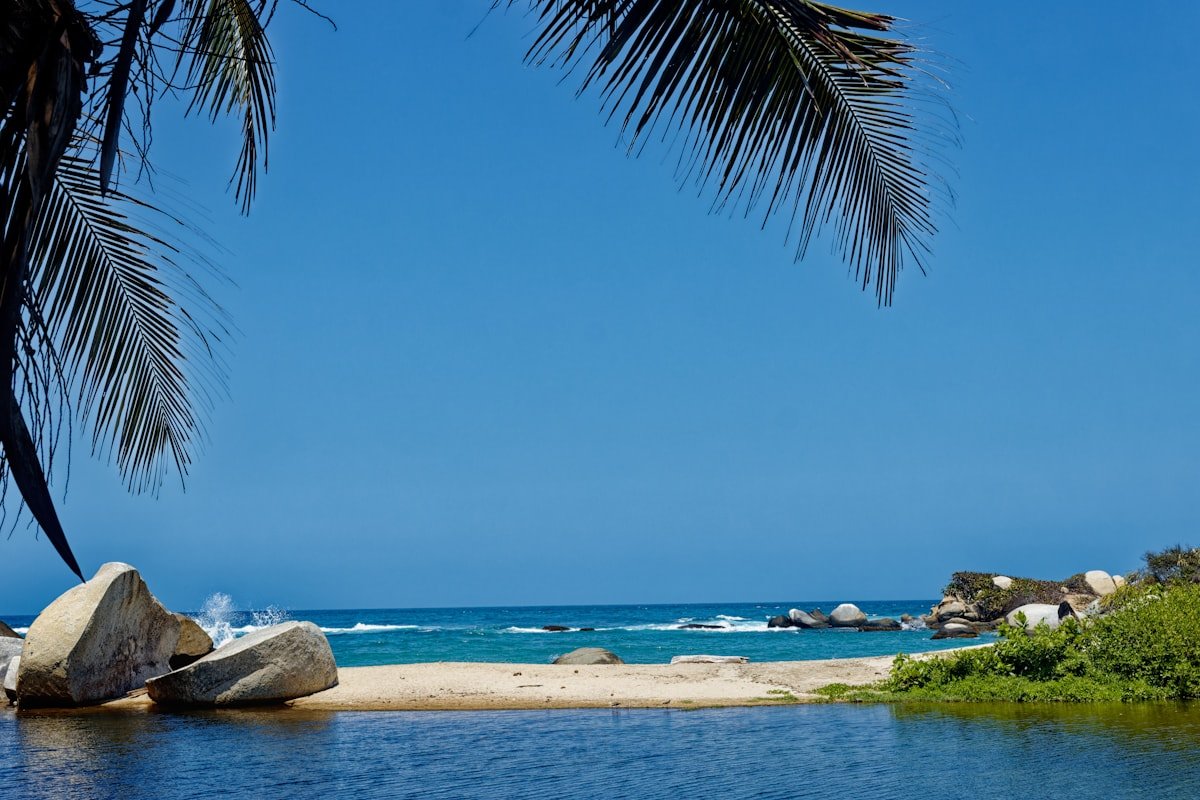
I’ll say it simply: Tayrona is my favorite place in Colombia. Not the most sophisticated, not the most convenient. My favorite. The immensity of the trees, the boulders the size of houses sitting on white sand, beaches where you’re the only person for hundreds of meters, accommodations that share the jungle without damaging it. This park changes how you think about what a beach destination can be.
Tayrona National Natural Park covers roughly 15,000 terrestrial hectares and 4,500 marine hectares along Colombia’s Caribbean coast, about 34 kilometers from Santa Marta. It sits at the foot of the Sierra Nevada de Santa Marta, the highest coastal mountain range in the world. The park is named after the Tairona civilization whose descendants, the Kogi, Wiwa, Arhuaco, and Kankuamo peoples, still live in the Sierra Nevada and consider this land sacred. That’s not a historical footnote. It shapes how the park operates today.
Three times a year, Tayrona closes completely to allow the ecosystem to rest and to respect the indigenous communities’ spiritual practices. In 2026, the planned closures are February 1-15, June 1-15, and October 19 to November 2. These dates align with the Kogi calendar of spiritual cleansing and territorial harmonization. Check the current status before planning your trip, because closures are non-negotiable and occasionally extended.
Understanding the Park: Four Entrances, Two Zones
Tayrona has more than 34 beaches, but not all are open to tourism. The park divides into two main zones, and understanding this saves you from wasted time and missed expectations.
The western zone is for day visits only. No overnight stays. Two entrances: Bahia Concha (via Bastidas) and Neguanje (via Palangana). The beaches here include Bahia Concha, Chengue, Gairaca, Neguanje, Playa Cristal, and Cinto. Playa Cristal is the standout: calm water, exceptional snorkeling, limited daily entry. It’s my recommendation for families and for anyone who wants the clearest water in the park without a long hike.
The eastern zone allows overnight camping. Two entrances: El Zaino and Calabazo. Beaches include Cañaveral, Arrecifes, Arenilla, La Piscina, Cabo San Juan, and Playa Brava. This is the zone for trekkers, campers, and travelers who want to wake up inside the jungle with the sound of monkeys overhead and the Caribbean fifty steps from their hammock.
The Beaches You Should Know
Cabo San Juan. The icon. The photo you’ve seen with the thatched-roof platform on a rocky promontory overlooking two bays. Getting here requires a three-hour trek from the Zaino entrance through dense jungle. The trail passes through forest with howler monkeys, leaf-cutter ants, and occasional sloths. You can camp in hammocks or tents right on the beach. The setting is raw, beautiful, and unlike any resort beach anywhere. Book camping in advance, especially for weekends and Colombian holidays.
Playa Cristal. The best snorkeling in the park. Calm, clear water with visible coral and fish right from the shore. Daily entry is limited, which keeps it uncrowded. Access is by boat from Neguanje or Taganga, or through the Neguanje entrance by land. This is where I’d send anyone traveling with kids or anyone who wants to spend a full day in the water without fighting waves. There’s a nudist section further along the coast, completely relaxed and undisturbed.
Bahia Concha. The closest Tayrona beach to Santa Marta. No park entry fee at this entrance, only accident insurance. It has carpa (tent) rental, locker service, and a mangrove area at the far end where you can kayak through calm water and spot crabs, birds, and reptiles. The back section of the beach is the quietest. Come early: the park limits daily capacity to 2,000 people and closes when it’s full.
La Piscina. A small, sheltered beach between Arrecifes and Cabo San Juan. Calmer than most beaches on the eastern side. Good for swimming, which many Tayrona beaches aren’t (the currents can be dangerous). It’s a natural pause on the trek to Cabo San Juan.
Playa Brava. For experienced hikers only. Accessible from the Calabazo entrance through a demanding trail: roughly two hours up, two hours down, through thick vegetation and steep terrain. The reward is a nearly empty beach with powerful waves, spectacular sunrises, and eco-cabins where you can stay for multiple nights. This is the Tayrona that feels truly wild. If you have the fitness and two nights to spare, it’s unforgettable.
What the Trekking Is Actually Like
The trails in Tayrona are accessible. That’s something people don’t always expect. The main route from Zaino to Cabo San Juan is about three hours, mostly flat with some gentle inclines through shaded forest. You don’t need to be an athlete. You need comfortable shoes (the trail gets muddy after rain), water, sunscreen, and a willingness to walk at a pace that lets you notice things: the size of the trees, the sound layer of insects and birds, the way the jungle opens suddenly onto a beach.
The Calabazo entrance to Playa Brava is different. That’s a real hike. Steep mountain ascent, remote trail, several hours with a heavy pack if you’re camping. Beautiful, but save it for when you’ve already done the Zaino route and want something more demanding.
Horses and mototaxis are available at certain entrances for the uphill portions if you want to skip the hardest sections.
Staying Inside the Park
Tayrona’s accommodations aren’t hotels. They’re hammocks strung between trees, tents on platforms near the beach, and eco-cabins built from natural materials that sit inside the forest without disrupting it. That’s part of what makes this place special. You’re not visiting nature from a distance. You’re sleeping in it.
At Cabo San Juan, you can rent a hammock on the famous rocky platform (the one in all the photos) or in covered areas closer to the beach. Tents are also available. Meals are served at simple on-site restaurants. Don’t expect luxury. Expect exactly what should be here: basic comfort surrounded by one of the most beautiful natural settings in the Americas.
Playa Brava has its own cabins and meal service. More isolated, more quiet, more committed to disconnecting. If you stay two nights, you’ll understand why people come back.
Reservations for camping and hammocks should be made online in advance through the park’s official system. Cash is not accepted for entry fees. Everything is processed through reservas.parquesnacionales.gov.co. During high season, capacity fills fast.
Getting There and Practical Tips
From Santa Marta, the Zaino entrance is about 34 kilometers northeast. Agency transport with a private driver is the most comfortable option, especially if you’re carrying camping gear. Your driver can drop you at the entrance and pick you up on your way out.
Public buses to the park leave from Santa Marta’s market area and from the main road. Tell the driver which entrance you need. For the Neguanje entrance, public transport doesn’t reach the gate, so you’ll need a tour, private vehicle, or taxi.
Boat access is available from Taganga and El Rodadero for the western beaches (Playa Cristal, Bahia Concha, Cinto). Tours handle the logistics and are worth it for day visits.
Bring reef-safe sunscreen. Bring more water than you think you need. Wear shoes you can get muddy. And if you have snorkel gear, bring your own. Rental is available but having your own means you can jump in wherever the water is clear, which in Tayrona is often.
Respecting the Land
Tayrona is not just a park. It’s ancestral territory. The Kogi, Wiwa, Arhuaco, and Kankuamo peoples have maintained their relationship with this land for centuries, and the park’s management reflects that relationship. The annual closures aren’t bureaucratic decisions. They’re a recognition that this ecosystem needs rest and that the indigenous communities who have always cared for it know best how to do so.
As visitors, the minimum we can do is respect the rules: stay on marked trails, carry out your trash, don’t feed wildlife, and don’t enter restricted areas. The park’s beauty is the direct result of the care it receives. Keep it that way.
Frequently Asked Questions
How many days do you need for Tayrona?
Two to three. One day is enough for a beach visit (Playa Cristal or Bahia Concha by boat). Two days lets you trek to Cabo San Juan, camp overnight, and return. Three days if you want Playa Brava or want to explore multiple beaches without rushing.
When does Tayrona close in 2026?
Planned closures: February 1-15, June 1-15, October 19 to November 2. Additional closures can occur for security or weather reasons, so always check the park’s official site before traveling.
Is the Cabo San Juan trek difficult?
No. It’s about three hours from the Zaino entrance on a mostly flat, shaded trail. Comfortable shoes and water are all you need. The Calabazo to Playa Brava route is significantly harder and requires good fitness.
Can I visit Tayrona as a day trip from Santa Marta?
Yes. The western beaches (Playa Cristal, Bahia Concha) work well as day trips by boat or car. Cabo San Juan is possible as a long day hike from Zaino, but camping overnight is a much better experience.
Do I need to book in advance?
Yes. Entry is managed through the online reservation system (reservas.parquesnacionales.gov.co). Cash is not accepted at the gates. Camping at Cabo San Juan should be reserved ahead, especially for weekends and holidays.