Eje Cafetero Complete Guide: Colombia’s Coffee Region
What Is the Eje Cafetero?
I’m a Colombian who loves coffee. That’s not unusual. But the Eje Cafetero is where that love stops being abstract and becomes something you can walk through, taste, and understand. This is the region that built Colombia’s identity as a coffee country, and visiting it feels like stepping into the process itself.
The Eje Cafetero (Coffee Axis) stretches across the departments of Caldas, Risaralda, and Quindio, with Manizales, Pereira, and Armenia as its three main cities. In 2011, UNESCO inscribed the Coffee Cultural Landscape as a World Heritage Site, recognizing it as a living example of sustainable agriculture shaped by over a century of small-scale coffee farming on steep Andean terrain. The designation covers 47 municipalities across four departments, including parts of Valle del Cauca.
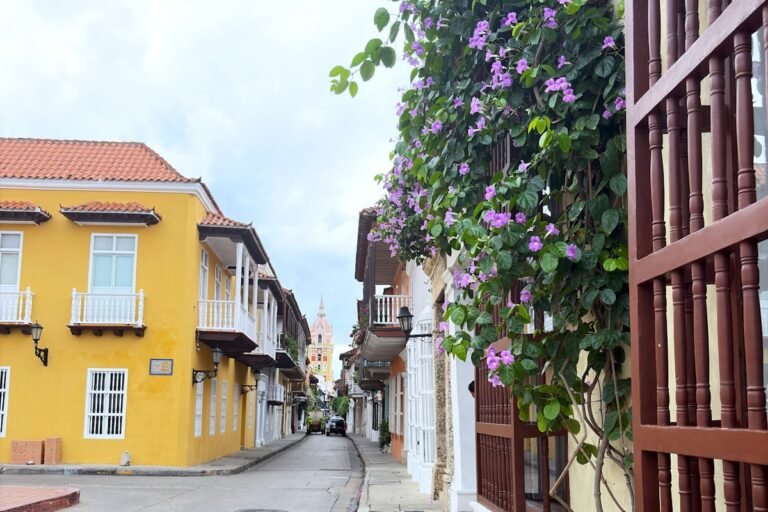
What makes this region unique in the world isn’t just the coffee. It’s how coffee shaped everything else. The colorful colonial towns, the Willys jeeps still used as public transport, the haciendas tucked into mountain slopes, the warmth of the people (who are, without exaggeration, among the friendliest in Colombia). The Eje Cafetero is a place where landscape, culture, and daily life all grew from the same root. And drinking a cup of coffee here, prepared by someone who picked the beans that morning, is a completely different experience from anything you’ve had before.
When to Visit the Coffee Region
The Eje Cafetero doesn’t have extreme seasons, but elevation matters. Temperatures vary depending on altitude: Salento at around 1,900 meters stays cool (15-20°C), while Armenia at 1,500 meters is warmer. Pereira and the lower valleys can feel almost tropical. Pack layers. You’ll use them.
The driest months are December through February and July through August. Rain is always possible, especially in the afternoons, and it can come fast. Bring a light rain jacket regardless of when you visit. The upside of the rain is obvious: those mountains stay impossibly green all year.
Coffee has two harvest seasons. The main harvest runs October through December, and the secondary harvest (called mitaca) from April through June. Visiting during harvest means you can participate in the actual picking on a working farm. Outside harvest, you’ll still get the full tour and tasting experience, just without the picking.
Where to Stay: Haciendas, Fincas, and Boutique Hotels
This is one of the few places in Colombia where I’d say the accommodation is part of the experience, not just a place to sleep.
Coffee haciendas are the signature stay. These are working farms converted into guesthouses, surrounded by cafetales (coffee plantations) on every side. You wake up to mountain views, have breakfast with fresh fruit and coffee picked from the property, and walk out into the fields if you feel like it. Some are luxurious, some are simple. Both versions deliver something hotels can’t: the sound of absolute quiet, broken only by birds.
Salento has the widest range of accommodation. Hostels, boutique hotels, guesthouses, all within walking distance of the Calle Real and the main plaza. It’s the most popular base for visiting the Cocora Valley, and the town’s tourism infrastructure is well developed. If you want walkability and restaurants at your doorstep, stay here.
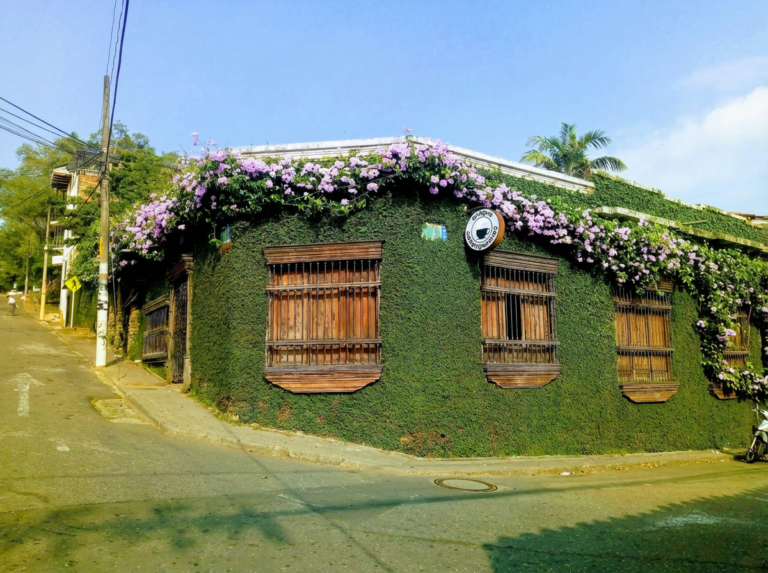
Finlandia is a quieter alternative. Another colorful town, less visited than Salento, with a more local atmosphere. Fewer international tourists, more of the pace the coffee region is actually known for.
Pereira works as a base if you want urban conveniences. It’s the largest city in the region, with the most flight connections, and it puts you within an hour of most attractions. Armenia is closer to Salento and the Cocora Valley. Manizales is best for the Nevado del Ruiz.
The Cocora Valley: Wax Palms and Cloud Forest
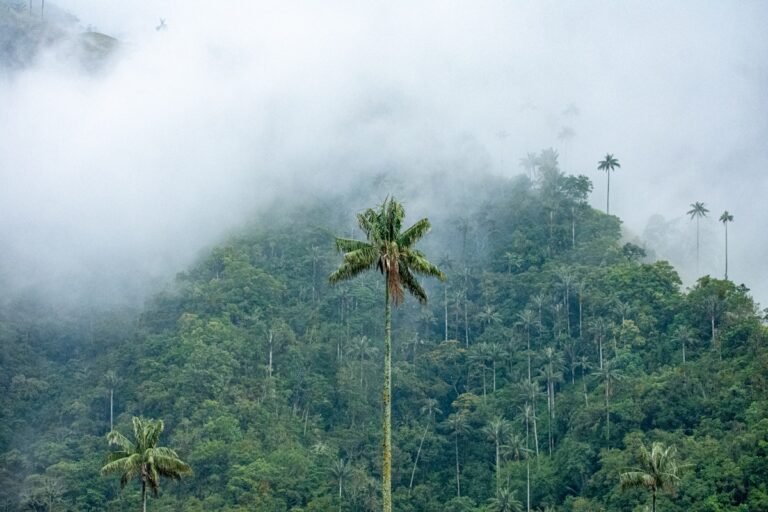
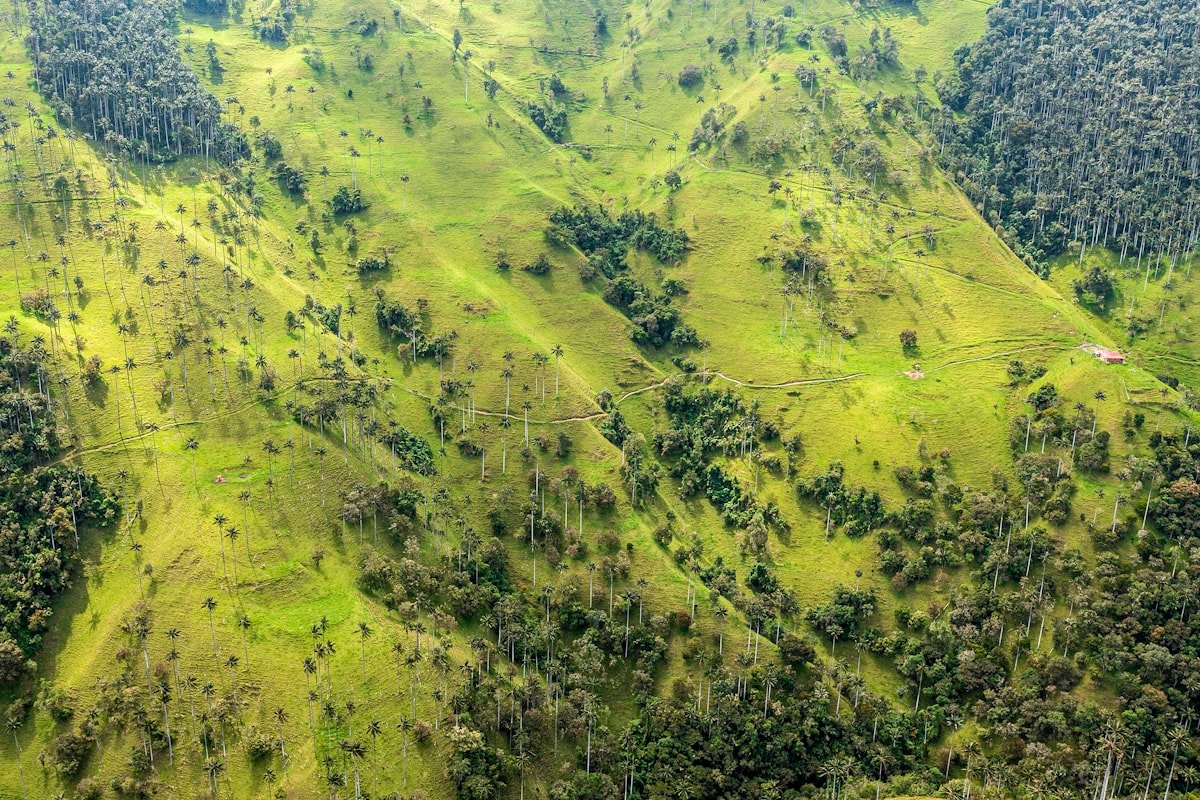
This is the image you’ve seen on every Colombia travel poster: impossibly tall palm trees rising out of green mountains into low clouds. The Cocora Valley, part of Los Nevados National Natural Park, is home to the Ceroxylon quindiuense, the wax palm. It’s Colombia’s national tree, the tallest palm species in the world (reaching up to 60 meters), and it’s endangered. Seeing them in person is different from photographs. The scale is hard to process. These aren’t decorative palms. They’re ancient, towering, and they exist here and nowhere else on Earth.
There are two main hiking options. The shorter route takes you to the valley viewpoints and back in about two to three hours. The longer loop is roughly 12 kilometers, takes five to six hours, passes through cloud forest, crosses suspension bridges, and reaches the Casa de los Colibries (Hummingbird House) at the midpoint. The longer hike requires decent fitness; parts of the trail climb to nearly 3,000 meters and the altitude can catch you off guard if you’re coming from sea level.
Most visitors reach the valley from Salento by Willys jeep, a 20-minute ride that costs a few thousand pesos each way. Jeeps leave from the main plaza and run regularly, though the last one back is typically around 4 or 5pm. Come on a weekday if you can. Weekends and holidays bring crowds that can feel overwhelming, and on the busiest days the road into the valley gets backed up with cars.
Practical note: the trails get muddy. Seriously muddy. You can rent rubber boots at the entrance, and I’d recommend it unless you’re wearing shoes you don’t care about. The weather shifts fast here. You might start in sunshine and be in cloud cover thirty minutes later. That’s part of the magic, honestly. When the mist rolls through the palms, the valley looks like something out of a film.
Salento: Colombia’s Most Photogenic Town
Salento was founded in 1842, which makes it one of the oldest settlements in Quindio. It’s small, roughly 10,000 people, and the kind of place where you can walk the entire town in an afternoon. The Calle Real is the main street: colonial houses painted in every color, lined with artisan shops, cafes, and souvenir stores. It’s photogenic in a way that feels earned rather than staged. These buildings have been here for generations.
At the end of the Calle Real, a long staircase climbs to the Alto de la Cruz, a free viewpoint overlooking the town and the valley beyond. There’s a second mirador nearby with mountain views. Both are worth the climb, especially if you time it for late afternoon light.
Is Salento touristy? Yes. Especially on weekends and during Colombian holidays. You’ll hear English, French, and German on the streets. The plaza fills with Willys jeeps loading up for Cocora. But the town handles it well. The infrastructure exists without having erased the character. And if you walk a few blocks off the main drag, you’re back in a quiet mountain town where locals sit on porches and the pace drops to zero.
One note from the transcriptions I’ve reviewed: most places in Salento still operate on cash only. Bring pesos. Cards aren’t widely accepted outside the larger hotels.
Coffee Farm Visits: What to Expect
Do this. Whatever else you skip, don’t skip this.
There are dozens of fincas cafeteras throughout the region offering tours. The typical visit lasts two to three hours and walks you through the entire coffee process: planting, growing, harvesting, washing, drying, roasting, and finally tasting. You’ll learn things that change how you think about coffee. The drying process alone takes around 20 days in the sun. The difference between a specialty-grade bean and a commercial one comes down to details that are invisible until someone shows you. And the cup you drink at the end, made from beans that were on the plant that same week, tastes nothing like what you buy in a supermarket.
Here’s something that surprised me: more foreigners do these tours than Colombians. We’re a country that built its identity on coffee, and most of us have never seen the process. If you’re Colombian and you haven’t done this, fix that. If you’re visiting from abroad, this is one of the most authentic experiences Colombia offers.
Some farms let you pick coffee during harvest season. Poncho, sombrero, basket, and you’re in the cafetales with the recolectores. It’s physical work, and you’ll understand quickly why good coffee costs what it costs.
Beyond Salento and Cocora
Finlandia. Fifteen minutes from the Cocora Valley turnoff. Just as colorful as Salento, a fraction of the crowds. The Colina Iluminada mirador is a 27-meter wooden observation tower with 360-degree views of the Quindio countryside. The climb is on foot, and the panorama at the top justifies every step.
Santa Rosa de Cabal. About 45 minutes from Pereira. Famous for its thermal springs, natural hot water cascading from the mountains into pools surrounded by forest. Go early or on a weekday if you want to avoid crowds. It’s a popular destination for Colombians, and peak times can get packed.
The Parque del Cafe. A theme park near Armenia dedicated to coffee culture. It’s part educational (the show about coffee’s history is worth catching), part amusement park (roller coasters, water rides), and entirely Colombian in spirit. About 30 minutes from Armenia. Check their schedule before going, because it’s not open every day.
Nevado del Ruiz. An active volcano at 5,321 meters, accessible from Manizales. You can drive to the park entrance and hike through paramo landscapes with frailejones (the iconic high-altitude plants), volcanic terrain, and views that make you forget you’re still in the tropics. The entry point doesn’t require a guide for the main trails. Nearby, the Termales del Ruiz offer thermal baths at altitude, surrounded by cloud forest and hummingbirds. If you have time for an overnight, this is a spectacular way to close out the coffee region.
Getting There and Getting Around
Pereira (Matecaña Airport) and Armenia (El Eden Airport) both receive domestic flights from Bogota. The flight is about 30 minutes. By bus from Bogota, it’s roughly seven hours to Armenia.
For getting the most out of the region, agency transport with a private driver is the best option. The Eje Cafetero is spread across mountains, and having a driver who knows the roads means you spend your time at haciendas and viewpoints instead of figuring out rural routes. This is one of the regions where a private driver makes the biggest difference, because attractions are scattered across three departments and public transport between smaller towns can be slow.
Between towns, the Willys jeeps are the traditional transport. They leave from the main plazas and run set routes: Salento to Cocora, Salento to Armenia, and so on. Fares are a few thousand pesos per ride. The jeeps are part of the region’s identity. Originally, they were the only vehicles powerful enough to haul coffee out of mountain farms. Now they carry tourists alongside locals, and riding in one, with the valley spreading out behind you, is one of those small moments that sticks.
For connectivity, Claro or Movistar SIM cards work throughout the region, though signal can be spotty in the most rural areas and higher elevations. Download offline maps before heading into the Cocora Valley or toward the Nevado del Ruiz.
Frequently Asked Questions
How many days do you need in the Eje Cafetero?
Four to five days minimum. One for Salento and the Cocora Valley. One for a coffee farm tour. One for Finlandia or Santa Rosa de Cabal. One for the Parque del Cafe or a second hacienda. Add a day for the Nevado del Ruiz if your schedule allows.
What’s the best base for exploring the coffee region?
Salento for the most walkable experience and proximity to the Cocora Valley. Pereira for urban comforts and the widest transport connections. A coffee hacienda if you want total immersion.
Is the Cocora Valley hike difficult?
The short route (2-3 hours) is manageable for most fitness levels. The long loop (5-6 hours, 12km) is more demanding and includes altitude above 2,800 meters. Trails get very muddy. Rent boots at the entrance.
When is coffee harvest season?
Main harvest: October through December. Secondary harvest (mitaca): April through June. Outside these windows you can still visit farms and do tastings, just without the hands-on picking experience.
Can I visit the Eje Cafetero without speaking Spanish?
Yes, though some Spanish helps. Many coffee tours offer English-speaking guides, and Salento is well set up for international visitors. In smaller towns and rural fincas, Spanish is essential. Your driver or guide can bridge the gap.