Bogota Colombia: The Complete Travel Guide 2026
Why Bogota Deserves More Than a Layover
Here’s what happens with most Colombia trips. You land in Bogota, spend a night near the airport, maybe squeeze in the Gold Museum, and fly out to Cartagena or Medellin the next morning. I get it. The other cities have better marketing. But you’re making a mistake.
Bogota didn’t grow to be a tourist destination. It grew because of its history. Decades of internal conflict pushed millions of people toward the capital, and that migration shaped everything about the city: its size, its neighborhoods, its food, its identity. What you find here isn’t curated for visitors. It’s genuine. And that’s exactly why it’s worth your time.
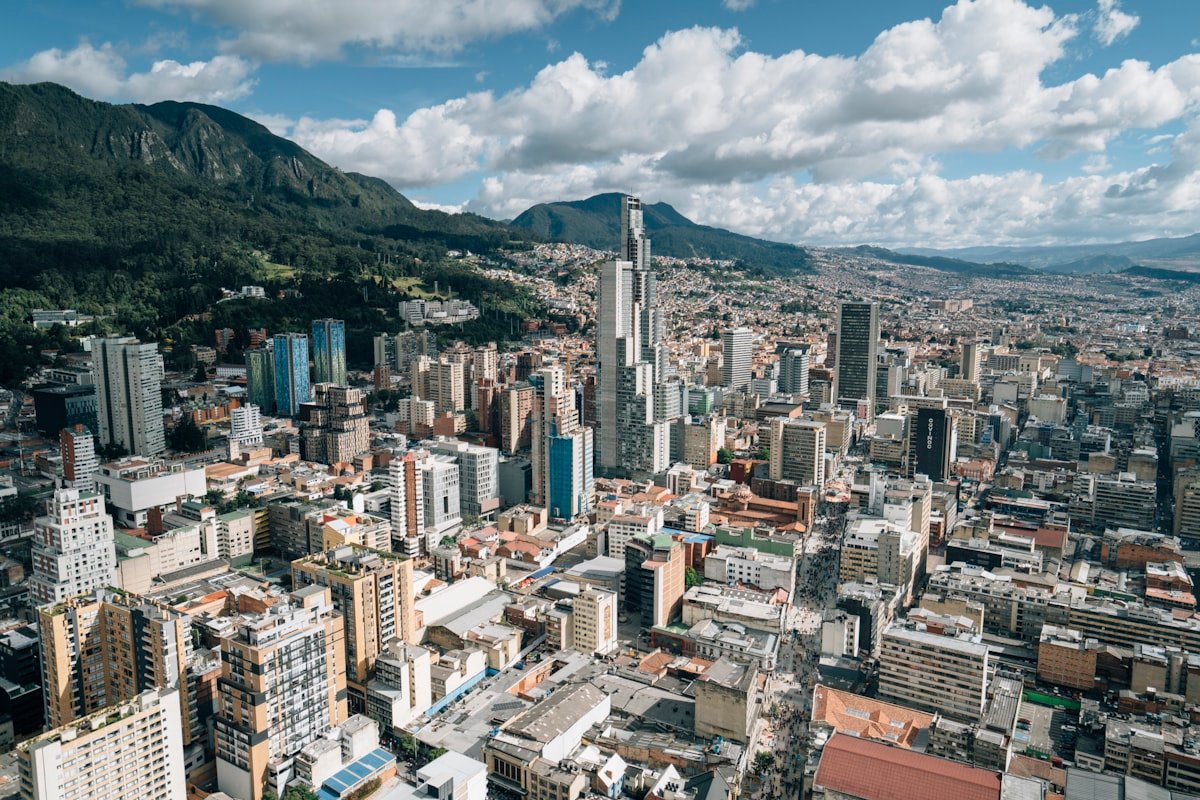
I’ve lived here for over a decade. When I came back after years of traveling, the thing that hit me hardest wasn’t the architecture or the food. It was the people. Bogotanos are warm in a way that doesn’t match the stress of a city this big. And then there are the cerros orientales, the eastern hills that follow you everywhere. You look up from any street corner and there’s nature, right there, pushing back against a city that won’t stop growing. That contrast never gets old.
Give Bogota at least three full days. You won’t regret it.
When to Visit
Bogota sits almost on the equator, but at 2,640 meters above sea level, it feels nothing like the tropics. Temperatures stay between 13 and 18°C all year. Mornings are cool. Afternoons warm up. Rain shows up without warning and leaves just as fast. Bring layers and a light rain jacket, and you’re set for any month.
December through February and June through August are the driest stretches. March has Estereo Picnic, one of Latin America’s biggest music festivals. The city also runs Rock al Parque, Salsa al Parque, and a theatre scene that honestly surprised me when I first started paying attention. There’s no bad time to come. Just pick your dates and show up.
Neighborhoods: Where You Stay Changes Everything
La Candelaria is the historic center and probably where you’ll spend your first day. Colonial buildings, street art everywhere, museums you can walk between. There’s a narrow alley called the Calle del Embudo that funnels you between walls covered in murals. It feels like stepping into a completely different city. La Candelaria is great during the day. At night, grab a taxi instead of walking.
Chapinero Alto and La Macarena are where I send people who want to eat well. Safe, walkable, full of restaurants and cafes that locals actually go to. This is also where some of Colombia’s most important restaurants are located, which I’ll get to.
Usaquen used to be its own town before Bogota swallowed it. You can still feel that. There’s a central park, a Sunday flea market, colonial streets mixed with boutique shops. It’s quieter, greener, and a nice change from the intensity of the center.
Zona T and El Chico are the modern zones. Hotels, pubs, nightlife, shopping. Very safe for foreigners. The contrast between walking Zona T at night and walking La Candelaria in the morning captures exactly what Bogota is. Modern and historic, always side by side, always connected by the red brick that’s everywhere in this city.
The Brick, the Buildings, and Rogelio Salmona
That brick isn’t an accident. Bogota has a visual identity built on red and orange brick that you don’t find anywhere else in Latin America. And one architect in particular turned that material into something extraordinary.
Rogelio Salmona (1929-2007) was Colombian-French, and he’s responsible for some of the most important buildings in the country. His masterpiece is the Biblioteca Virgilio Barco, a spiral of brick and water mirrors next to Simon Bolivar Park. What makes it special is that Salmona designed every curve and terrace so the building never blocks your view of the eastern hills. He believed architecture should frame the landscape, not compete with it. Walking through the Virgilio Barco, you feel that: the mountains are always there, reflected in the water, framed by the brick.
He also designed the Torres del Parque, one of the most recognizable residential complexes in the city center. Both are worth visiting even if architecture isn’t your thing. The Virgilio Barco was declared a National Cultural Heritage Site, and it sits next to the Jardin Botanico, which is another quiet, beautiful space that tourists rarely find.
Where to Eat (This Is Where Bogota Gets Serious)
If I had to pick restaurants for someone visiting the first time, I’d start traditional and then flip the script.
Casa Mama Luz and Restaurante Santa Fe are both in La Candelaria, both in old colonial houses that feel exactly right for what they serve. Order the ajiaco. It’s Bogota’s signature dish: a thick chicken and potato soup with guascas (a local herb), served with avocado, capers, cream, and rice. These places aren’t trying to win awards. They’re trying to show you how good traditional Colombian food is. And from the moment the plate arrives, you can see the care in the presentation. It tells a story.
Now the contrast.
El Chato, led by chef Alvaro Clavijo, was named Best Restaurant in Colombia in 2024 by Latin America’s 50 Best. It’s ranked #54 globally. What I find interesting about El Chato is the rotating menu that changes based on what’s in season. It celebrates the country’s diversity through food, and the atmosphere is relaxed. You don’t feel like you’re performing a fine dining ritual. You feel like you’re being fed well by people who care about ingredients.
Leo Cocina y Cava is a different experience entirely. Chef Leonor Espinosa has built something sophisticated and deeply Colombian. She uses ingredients from indigenous and Afro-Colombian communities that no other chef in the country was working with when she started. Leo is ranked #76 in the World’s 50 Best Restaurants 2025 and #23 in Latin America. The tasting menu is a journey through Colombia’s biodiversity. It’s not casual. It’s an event.
That range is what makes Bogota’s food scene special. You go from ajiaco in a colonial house where the recipe hasn’t changed in generations, to a tasting menu using Amazonian ingredients you’ve never seen, and both experiences are authentic. Both are Bogota.
Paloquemao Market
Paloquemao isn’t a tourist market. It’s where Bogota feeds itself.
It opens before dawn, and those first hours belong to restaurant owners and wholesale buyers stocking their kitchens. But the market stays open through the morning, and honestly, the later morning hours work better for visitors. It’s calmer. You can walk the aisles without the commercial rush, and the vendors are happy to let you try things.
You’ll find fruits you didn’t know existed. Gulupa. Araza. Anon. Guanabana. Maracuya so tart it wakes you up, and mango so sweet it tastes like someone added sugar (they didn’t). In season, that mango costs almost nothing. This is a real piece of Colombia: home cooks and high-end restaurant chefs buying from the same stalls, vendors who’ve worked there for decades cracking jokes and calling out prices. There’s an order inside a slight Latin chaos, and that’s what makes it genuine.
Monserrate
Monserrate sits at 3,152 meters, overlooking everything. You can walk up (lots of locals do this as their morning workout), take the cable car, or ride the funicular. Check hours before you go because they shift with the season.
Go in the morning. The light’s better, the crowds are thin, and you can actually see how massive this city is. Behind you, the Andes. Below, Bogota stretching in every direction. Cerro de Guadalupe rising in the background. It’s one of those views that puts the whole trip in perspective.
Getting Around Safely
For airport transfers and day trips, agency transport is the safest bet. Period. For moving around on your own, InDriver and DiDi work well here. You set the price before the ride, the route’s tracked, and you don’t have to negotiate.
TransMilenio, the bus rapid transit system, covers most of the city and costs almost nothing. It gets packed during rush hour, but off-peak it’s fast and fine. Keep your bag in front of you on the platform.
About safety. Don’t walk around with your phone out. Don’t carry valuables in your pockets. Don’t hail random taxis from the street at night. The neighborhoods where hotels and restaurants are concentrated, La Macarena, Chapinero, Chapinero Alto, El Chico, are safe. The southern edge of the city and the outskirts aren’t where tourists should go. La Candelaria’s safe during the day but not great for solo walks after dark.
For connectivity, get a Claro or Movistar SIM card at the airport. Data for maps and ride apps makes everything smoother.
Day Trips Worth the Drive
Zipaquira Salt Cathedral. An underground cathedral carved into salt mines, about 50km north. The scale surprises everyone. Budget two to three hours plus travel time.
Laguna de Guatavita. This is the lake behind the legend of El Dorado. The Muisca people made gold offerings here. The hike to the viewpoint takes about 45 minutes, and entry’s managed by the indigenous community.
La Chorrera. Colombia’s tallest waterfall at 590 meters. About 90 minutes from Bogota by car, with a 90-minute hike through cloud forest each way. Absolutely worth it if you like being outdoors.
What I’d Tell a Friend Before Their First Visit
Enjoy it. Don’t believe every security myth you’ve read online. Bogota’s a city with an arts scene that’ll catch you off guard, festivals that fill entire parks with music, and food that covers everything from a 200-year-old restaurant to a chef working with ingredients from the Amazon. Walk the Virgilio Barco. Spend a morning in the historic center. Try the ajiaco. Go up Monserrate before the crowds. And give it three days at least, because Bogota isn’t a layover. It’s the city that made me fall in love with Colombia.
Frequently Asked Questions
Is Bogota safe for tourists?
Yes, if you use common sense. The hotel and restaurant zones are well-patrolled. Use ride apps, keep your phone out of sight on the street, and don’t walk La Candelaria alone at night. Agency transport is the best option for airport transfers.
How many days do you need in Bogota?
Three to four. Day one for the historic center and Monserrate. Day two for Paloquemao, restaurants, and neighborhoods like Chapinero or Usaquen. Day three for Zipaquira or Guatavita. Day four if you want the Jardin Botanico, Virgilio Barco, or the music and theatre scene.
What’s the best neighborhood to stay in?
Depends on what you want. La Candelaria for history and budget stays. Chapinero Alto or La Macarena for food and local energy. Usaquen for quiet weekends. Zona T or El Chico for modern comfort and nightlife.
Do I need a visa?
US, Canadian, UK, EU, and Australian citizens don’t need one for stays up to 90 days. Check current requirements for your nationality before booking.
What’s the weather like?
Cool and consistent. Between 13 and 18°C all year. Rain’s possible any month but usually short. Pack layers and a rain jacket.