Medellin Colombia Travel Guide: The City That Rebuilt Itself
Medellin in 2026: What the City Actually Feels Like
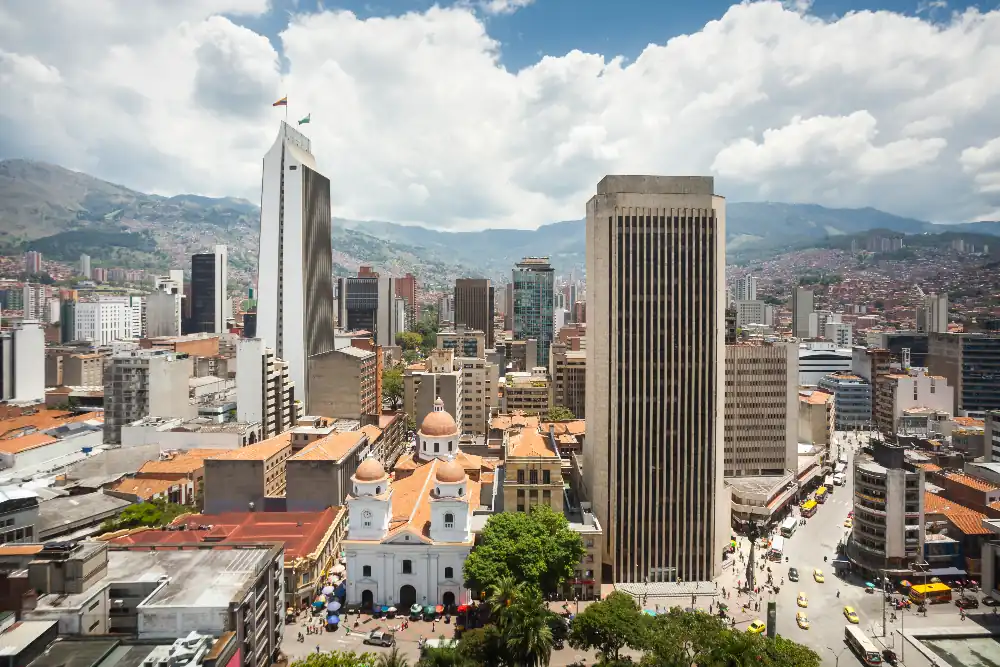
There’s a version of Medellin that lives on the internet. It’s either a digital nomad paradise with rooftop pools and coworking spaces, or it’s a place your family still warns you about based on things that happened 30 years ago. Neither version is accurate.
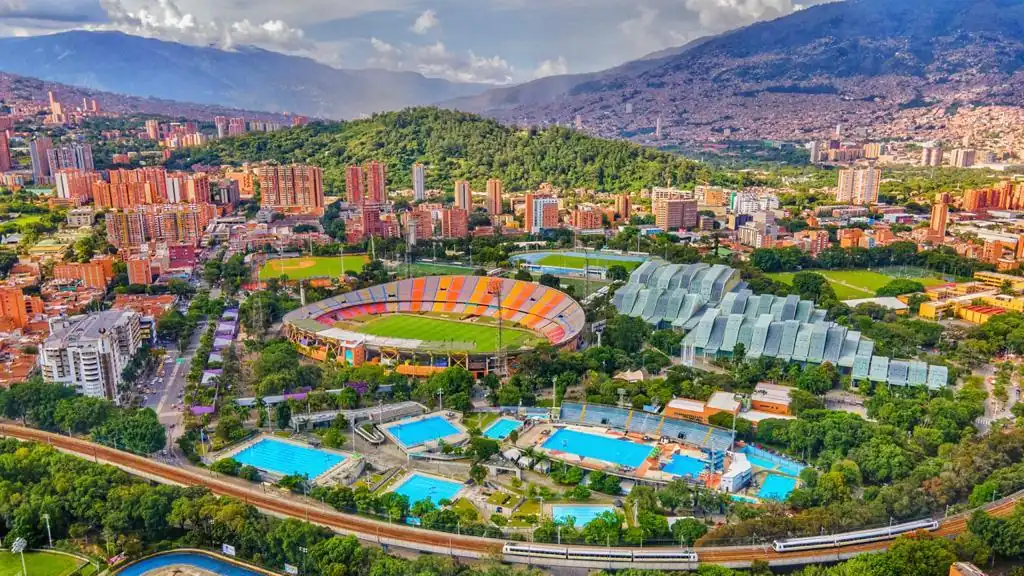
The real Medellin is somewhere in between. It’s a working city of roughly 2.5 million people spread across a valley in the Andes, at about 1,500 meters above sea level. That altitude keeps the temperature around 22°C year-round, which is why everyone calls it the City of Eternal Spring. The name isn’t marketing. It’s just what the weather does.
What hits you first is the geography. The city sits inside the Aburra Valley, and no matter where you are, mountains frame everything. You’re walking down a regular street, buying coffee, and then you look up. Green slopes everywhere, houses climbing the hillsides in rows of brick and color. It reminds you that this isn’t a flat, predictable place. Medellin grew into its landscape, not over it.
In 2013, the Wall Street Journal, Citi, and the Urban Land Institute named Medellin the most innovative city in the world, beating New York and Tel Aviv. That wasn’t about tech startups. It was about what the city did with public transportation, libraries in low-income neighborhoods, and infrastructure that connected communities that had been isolated for decades. You feel that spirit when you ride the Metro, take a cable car over the hillside barrios, or walk through Comuna 13. This is a city that decided to rebuild itself from the inside out.
When to Visit (the Eternal Spring, Explained)
Medellin doesn’t really have seasons. Not in the way you’re used to. Daytime temperatures hover between 24°C and 28°C most of the year, dropping to around 16°C at night. You’ll want a light jacket for the evenings, but that’s about it.
What does change is the rain. December through February and July through August are the drier months. April, May, September, and October bring more afternoon showers. The rain here is tropical, though: heavy, fast, and done within an hour. It almost never ruins an entire day. If anything, it clears the air and turns those surrounding mountains even greener.
The Feria de las Flores (Flower Festival) happens in early August. It’s the biggest cultural event of the year, and the city transforms. If you’re planning around a festival, that’s the one. But honestly, any month works. The weather won’t let you down.

Where to Stay: El Poblado, Laureles, and Beyond
El Poblado is where most visitors end up, and for good reason. It has the highest concentration of restaurants, cafes, and Airbnb options in the city. The main street, Carrera 43A (everyone just calls it “the Golden Mile”), is walkable and lined with places to eat. Provenza, a few blocks east, has become the going-out neighborhood with cocktail bars, terraces, and late-night energy. The downside? El Poblado’s roads are steep and winding once you step off the main strips. You’ll use ride apps constantly.
Laureles is the neighborhood I’d recommend if you want something closer to how locals actually live. It’s flatter, more walkable, and increasingly popular with long-term travelers who’ve done their homework. The coffee shop scene here is strong. Hotels and short-term rentals are growing fast, and prices tend to be a bit lower than El Poblado. You’ll see tourists, sure, but the ratio tips toward locals. That matters.
There’s also Manila, a smaller area near Laureles that works well for budget travelers. Good walkability, solid coffee shops, and a quieter vibe. Less variety in dining, but you’re close enough to Laureles that it doesn’t matter much.
For our travelers, we typically set up stays in El Poblado or Laureles depending on what they’re looking for. Both are safe, well-connected, and have everything you need within walking distance or a short ride.
What to Do in Medellin
Comuna 13. You’ve probably seen photos. The outdoor escalators, the street art, the murals covering every wall. What photos can’t capture is the atmosphere. In 2011, the city installed a 384-meter escalator system across six sections of this hillside neighborhood, replacing a climb equivalent to 28 stories. That infrastructure changed everything. A community that had been isolated and associated with violence became accessible, and the residents responded with art, music, hip-hop performances, small businesses, and a pride that’s impossible to fake. Go with a local guide. Take your time. And understand that you’re walking through one of the most meaningful urban transformations in Latin America.
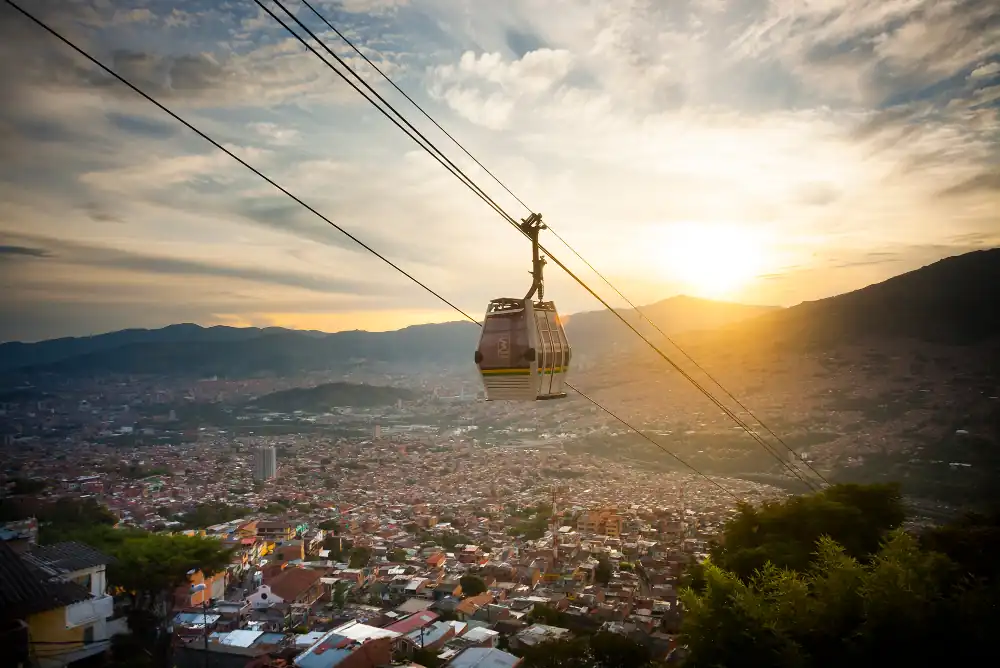
The Metro and Metrocable. Medellin has the only metro system in Colombia, operating since 1995. But it’s much more than a train. The system integrates cable cars (Metrocable), a tramway, and bus lines into one network. Take the Metrocable from Acevedo station up to Santo Domingo. The ride takes about nine minutes, and you’ll pass directly over hillside neighborhoods, seeing the city from a perspective that no taxi or walking tour can replicate. From Santo Domingo, you can connect to Parque Arvi, a nature reserve reachable only by cable car. The whole experience costs the same as a single metro fare.
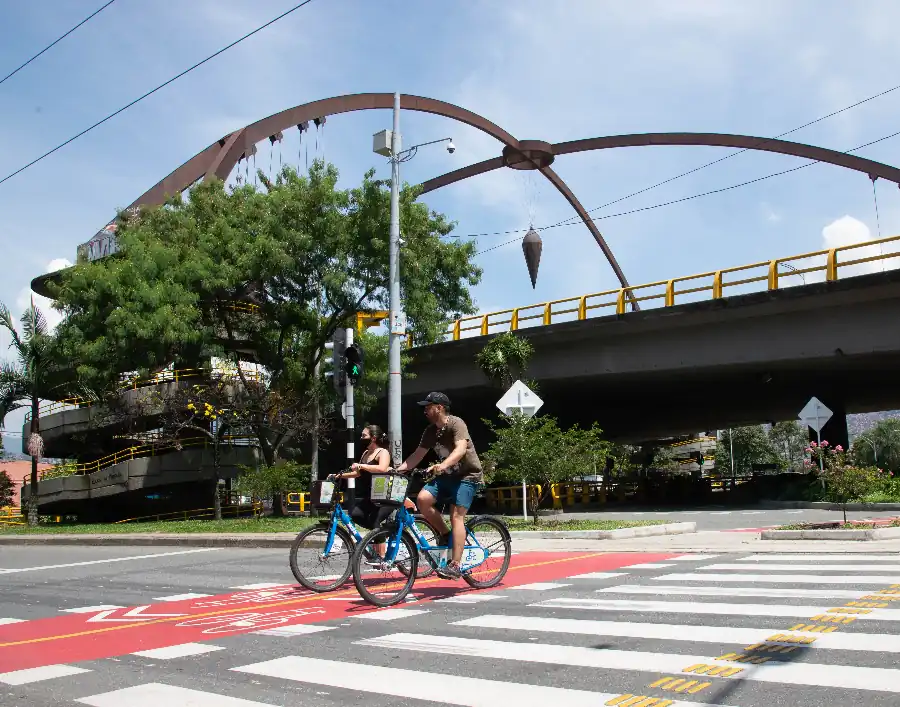
Sunday on Avenida El Poblado. Every Sunday morning, several streets across Medellin close to cars. The one closest to where most travelers stay is Avenida El Poblado. From 7am to 1pm, the road fills with runners, cyclists, skaters, families walking, and street vendors selling fresh juice and empanadas. There’s live music at different points. It’s the best way to feel the rhythm of the city without a plan. I’d also recommend stopping by the farmers market nearby, and then grabbing brunch along Calle 10, which crosses Avenida El Poblado. That intersection has some of the best traditional breakfast spots in the area.
Paragliding. This is one of those things that sounds touristy until you actually do it. There are launch sites right on the edge of the city where you tandem-fly over the entire valley. The views are ridiculous. If you want something even better, the town of Jardin (about three hours by road) offers paragliding over mountain landscape that’s completely different from the urban flights. Worth the drive.
Horseback riding. It doesn’t get talked about enough, but horseback riding is deeply rooted in Antioquian culture. There are several outfits outside the city that offer half-day rides through the countryside. It’s a nice change of pace from the urban attractions.
Where to Eat and Drink
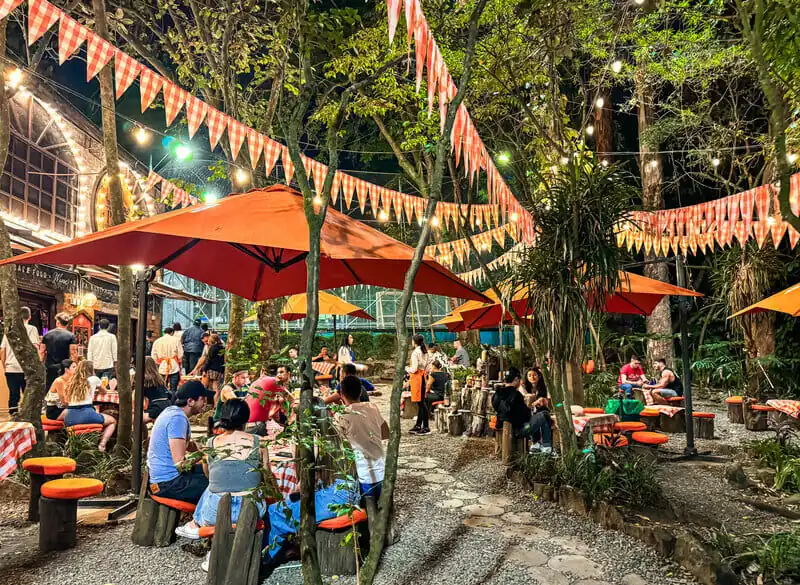
Medellin’s food scene has grown fast. The city isn’t Bogota in terms of fine dining depth, but the range of what you can find is impressive and keeps expanding.
For traditional Antioquian food, you’re looking at the bandeja paisa: beans, rice, ground beef, chicharron, fried egg, plantain, avocado, and arepa, all on one plate. It’s a lot. Don’t skip it. Most neighborhood restaurants (called “corrientazos”) serve a version for lunch that costs almost nothing and is filling enough to carry you through the day.
El Poblado and Provenza have the widest range of international options. Japanese, Peruvian, Italian, vegan, farm-to-table concepts. Laureles leans more local but has excellent bakeries and casual spots. The brunch scene in both neighborhoods has exploded in the last few years.
For coffee, Medellin takes it seriously. You’ll find specialty roasters throughout El Poblado and Laureles. Colombia’s coffee culture is shifting from “export everything good, drink the bad stuff locally” to actually appreciating high-quality single-origin beans at home. That shift is visible here.
Getting Around Medellin
For airport transfers, day trips, and anything outside the city, agency transport with a private driver is the safest, most comfortable option. Full stop. Your driver knows the roads, handles parking, and you don’t have to negotiate anything.
For getting around on your own, Uber works well in Medellin. I’d recommend choosing the Comfort tier when available, because standard cars in Colombia can be quite small, and if you’re carrying bags or traveling with someone else, the extra space makes a difference. DiDi is a solid alternative if you want a budget option. Both apps track your route and set the price upfront.
Don’t grab yellow taxis off the street. Some aren’t registered, and if you don’t know the area, a driver can take the long way and charge you more. It’s not a safety crisis, it’s just unnecessary friction. Ride apps eliminate the problem entirely.
The Metro is excellent for longer distances within the valley. Clean, safe, cheap. Combine it with the Metrocable and you can reach neighborhoods and viewpoints that would take 45 minutes by car in traffic. Get a Civica card (rechargeable transit card) at any station, it saves time and money.
For connectivity, pick up a Claro or Movistar SIM card. Data for maps and ride apps makes everything easier, especially when you’re in a neighborhood where streets wind uphill and landmarks aren’t always obvious.
Day Trips: Guatape, Santa Fe de Antioquia, Jardin
Guatape and La Piedra del Penol. About 75 kilometers east of Medellin, roughly two hours by road. La Piedra del Penol is a massive monolith rising 220 meters out of the landscape, with 740 steps carved into a crack in the rock leading to the top. The climb takes 15 to 30 minutes depending on your pace, and the view from the summit is one of the most photographed in Colombia: a reservoir stretching in every direction, dotted with green islands and surrounded by mountains. The town of Guatape itself is worth exploring. Colorful facades, hand-painted zocalos on every building, a lakefront with boat tours. Go on a weekday if you can. Weekends and holidays bring massive crowds.
Santa Fe de Antioquia. About 80 kilometers northwest, but the climate difference is dramatic. While Medellin sits at a comfortable 22°C, Santa Fe drops to a lower elevation and heats up to 30°C+. It’s a beautifully preserved colonial town with a famous suspension bridge (Puente de Occidente) from 1895. Great for a one-night escape if you want heat, pool time, and streets that feel like stepping back a century.
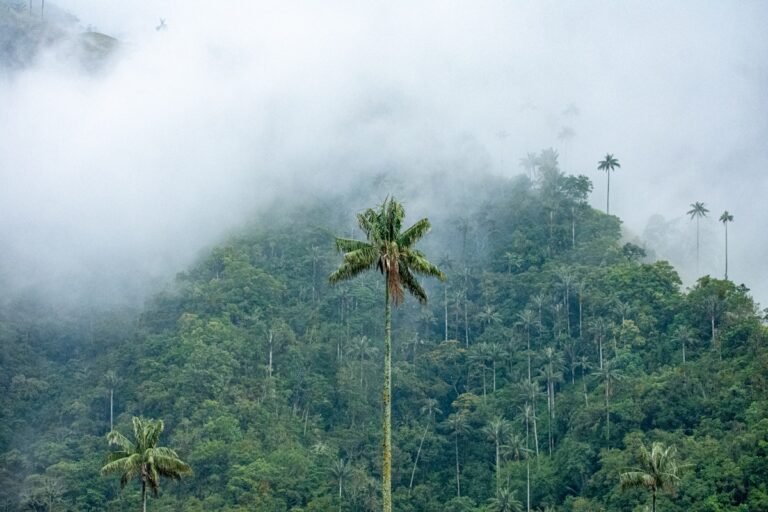
Jardin. Roughly three hours south of Medellin. This is one of my favorite towns in Antioquia. It’s small, incredibly photogenic, surrounded by coffee and sugarcane farms, and hasn’t been overrun by tourism yet. The main square is one of the prettiest in Colombia. Go for the paragliding, the birdwatching (Jardin is one of the best spots in the country for it), or just to sit in the plaza and do absolutely nothing. If you can, stay overnight.
Retiro, Santa Elena, and El Carmen de Viboral are three smaller towns within an hour or two of the city. Each is known for something different: El Carmen for its hand-painted ceramics, Santa Elena for its flower farms (the silleteros of the Flower Festival come from here), Retiro for a quieter mountain escape. All three make for relaxed half-day or full-day outings.
The Elephant in the Room: Narco Tourism
I’ll be direct about this. Medellin’s history with the drug trade is real, it shaped the city in ways that are still visible, and it’s a story worth understanding. But there’s a difference between understanding history and consuming it as entertainment.
The “Pablo Escobar tours” that some operators sell are, in my view, disrespectful to a city that lost thousands of people to that violence. Medellin has spent decades rebuilding its identity. The people who live here don’t define themselves by the cartel era, and visitors shouldn’t either.
If you want to understand Medellin’s transformation, visit Comuna 13 with a local guide. Ride the Metro and the Metrocable. Walk through Parque de los Deseos or the Botanical Garden. Talk to people. The story of how this city went from the most dangerous in the world to one of the most innovative is far more compelling than any Netflix storyline. And it’s still being written.
Safety: What You Actually Need to Know
Use ride apps. Don’t walk through empty, poorly lit streets at night (same advice as any major city). Keep your phone in your pocket in crowded areas, because pickpocketing exists here just like it does in Barcelona, Rome, or New York. The neighborhoods where tourists stay, El Poblado and Laureles, are safe during the day and at night.
Medellin’s tourism growth has been enormous, and yes, that growth has also attracted people who come to do things they wouldn’t do back home. Those stories make headlines. They don’t represent what happens to the overwhelming majority of visitors who come here to explore, eat well, and enjoy a city that genuinely rewards curiosity.
If you’re a solo female traveler and you’re hesitating: there’s a huge community of women traveling independently through Medellin. The city is set up for it. Trust your instincts, use the same precautions you’d use anywhere, and you’ll be fine.
Frequently Asked Questions
How many days do you need in Medellin?
Four to five days is ideal. Two for the city itself (Comuna 13, the Metro system, neighborhoods, food). One for Guatape. One for Jardin or Santa Fe de Antioquia. An extra day if you want to try paragliding or explore the smaller towns around the valley.
Is Medellin safe for tourists?
Yes, with standard precautions. Stick to El Poblado, Laureles, and the established tourist areas. Use Uber or DiDi instead of street taxis. Don’t flash valuables. Agency transport is the best option for airport transfers and trips outside the city.
What’s the best neighborhood to stay in?
El Poblado for the widest range of restaurants, nightlife, and Airbnb options. Laureles for a more local, walkable experience at slightly lower prices. Both are safe and well-connected.
Do I need to speak Spanish?
It helps. English is growing, especially in tourist areas, but Medellin is still a Spanish-speaking city. Download Google Translate, learn basic phrases, and you’ll get by. Paisas (Medellin locals) are famously warm and will go out of their way to help you communicate.
What’s the best time to visit Medellin?
Any month works thanks to the stable climate. December through February and July through August are the driest periods. The Feria de las Flores in August is the highlight of the cultural calendar.